
What Are Swollen Gums Around a Tooth?
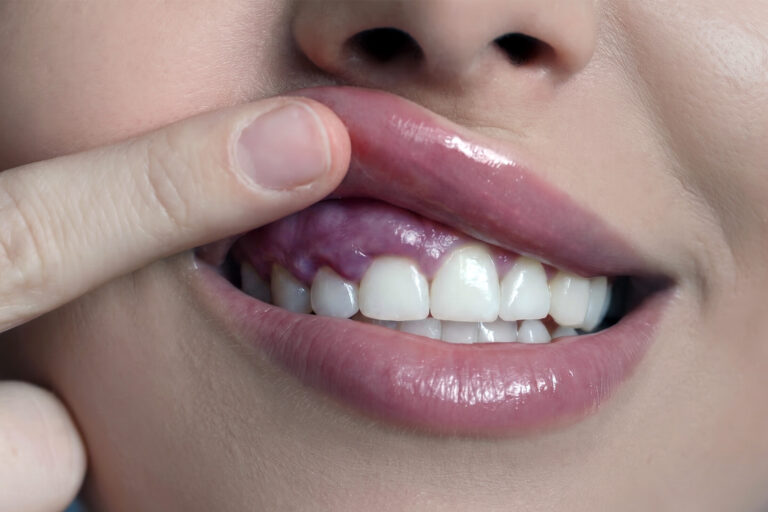
Swollen gums around a tooth usually mean the gum tissue near a single area is inflamed, irritated or infected. Causes of swollen gums vary.
Many people experience localised swelling in one area rather than throughout the mouth. When the gum around just one tooth becomes red, puffy, tender or raised, the cause is often local. It may be something simple, such as food trapped below the gum, or something more serious, such as a gum abscess, dental abscess, deep decay, a crack or periodontal disease. The swelling may appear suddenly or build up over several days.
Localised swelling is different from generalised swelling. A sudden swelling of a gum around one tooth can occur after food becomes lodged under the gum, after the gum is injured, or when an infection begins to develop. Persistent swelling requires a dental review, as the cause may not be visible at home. If swollen gums don’t resolve within a few days, consult a dentist.
Symptoms of Swollen Gums
Symptoms of gum swelling around a tooth include puffiness, pain, bleeding, bad taste, bad breath or tenderness when chewing.
- A swollen gum around the tooth may look red, shiny or enlarged.
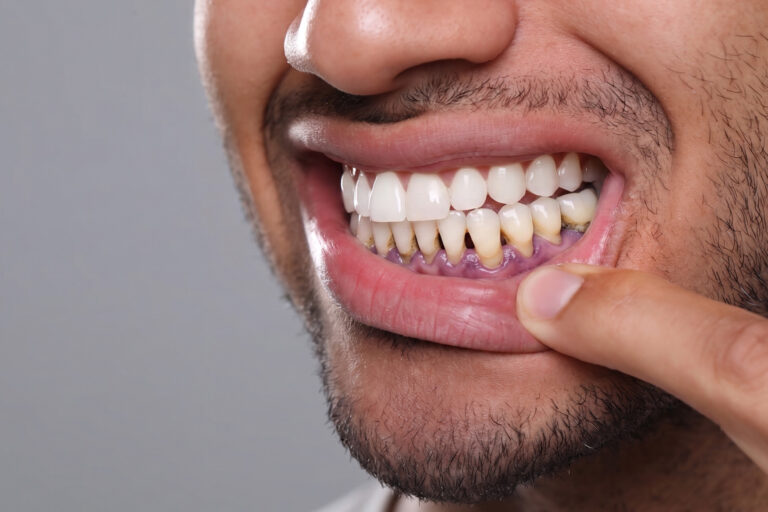
- The gum may bleed when brushing or flossing. Swollen, bleeding gums around one tooth often signal that bacteria, plaque, or trapped debris are irritating the gum tissue. Bleeding gums and other signs of gum inflammation may indicate early gum disease, such as gingivitis.
- Pain can range from mild tenderness to a swollen, painful gum around one tooth that throbs or feels worse when you bite. Gum swelling and pain around a tooth may also be linked to tooth decay, a crack, a dental abscess or a deep gum pocket.
- Some people notice sensitivity to hot, cold or sweet foods.
- Gum inflammation around the chewing surfaces can also make eating uncomfortable. Gum inflammation often improves once you treat the cause.
- Others notice a bad taste when pus drains from the area.
Don’t ignore a painful, swollen gum around a tooth, especially if the area feels loose, the pain spreads to the jaw or ear, or swelling appears on the face.
Why Is the Gum Swollen around One Tooth?
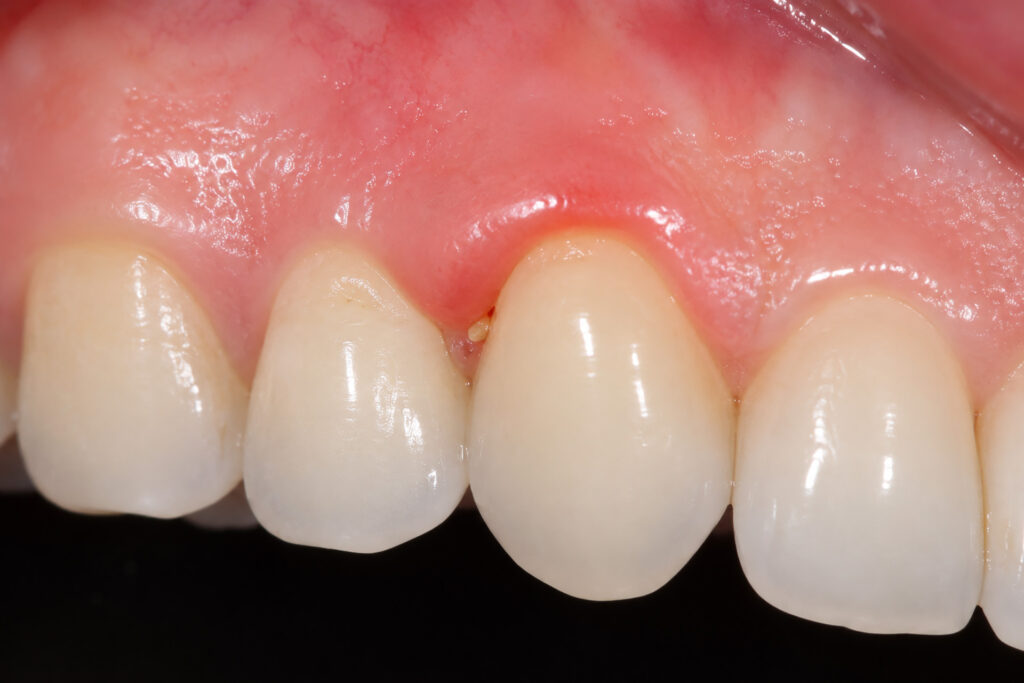
The gum around one tooth is usually swollen because bacteria, food debris, injury or infection has affected that local area.
- Food trapped below the gum is a common cause of swollen gums. Food particles, small pieces such as popcorn husk, seeds or meat fibres, can lodge between the tooth and gum and cause gum irritation if not removed.
- Poor oral hygiene is another common cause of swollen gums. Dental plaque builds up along the gum line and hardens into tartar. Plaque buildup, followed by tartar buildup, affects oral health and increases the risk of tooth decay. This can lead to gingivitis and bleeding gums, especially where brushing or flossing is difficult. Untreated gum disease can lead to more severe forms.
- Periodontal disease is another cause of swollen gums. In periodontitis, a more severe form of gum disease, the gums pull away and form deeper pockets that destroy the supporting tissues. Bacteria collect in these pockets and can cause swelling, pus, bone loss and looseness of the affected tooth.
- A dental abscess can cause local swelling. A periapical abscess starts from infection inside the root, often from deep decay or a crack. A periodontal abscess, another type of dental abscess, starts in the surrounding gum tissues. Both can cause redness, swelling, severe pain and an unpleasant taste.
- Partially emerged wisdom molars can cause swelling of the overlying gum. This is common when a gum flap traps food and bacteria around the molar.
- Other causes include ill-fitting crowns, rough fillings, braces, partial dentures, fractures, trauma from brushing too hard, and irritation from dental appliances. Such irritation can lead to inflamed gums or bacterial infection.
- Hormonal changes during pregnancy can also cause swollen gums because the gum tissue reacts more strongly to plaque, increasing the risk of bacterial infection.
- Vitamin C deficiency can contribute to swollen gums, especially when the diet is poor or gum healing is weakened. Certain medications can also affect gum tissue.
When to See a Dentist for Swollen Gums
See a dentist if swelling around a tooth lasts more than a few days, is painful, bleeds often, or comes with pus.
Book a dental appointment at TEETH @ Tiong Bahru if the swelling doesn’t settle with careful cleaning or if it keeps returning in the same area. You should also see a dentist if you have a pain when biting, a loose tooth, persistent bad breath, a bad taste, sensitivity or bleeding that keeps happening. Visit a dentist if swelling persists for more than a week, even if the pain is mild.
Seek urgent care if you have severe throbbing pain, fever, facial swelling, difficulty opening your mouth, difficulty swallowing or a general feeling of being unwell. These can signal a spreading infection.
A small area of swelling may be easy to manage when treated early. A delayed infection may need drainage, root canal treatment or extraction.

Diagnosis of Swollen Gums
Dentists diagnose swollen gums by examining the gums, checking the teeth, and taking X-rays when they suspect an infection or decay.
Your dentist will ask when the swelling started, whether it is painful, whether it bleeds, and whether you have noticed pus, a bad taste, or tooth sensitivity. They will examine the gum line and check for trapped food, plaque, tartar, broken fillings, decay, cracks, and signs of gum disease.
A periodontal probe may measure the space between the gum and the root. A deeper pocket can suggest periodontal disease or a local gum abscess. If it is painful, the dentist may test how it responds to tapping, pressure, cold, or other checks.
X-rays may be needed to look for decay, infection around the root, bone loss, a crack or an abscess. This step matters because the same gum swelling can have different causes. Treatment for trapped food is not the same as treatment for an infected nerve.
Non-Surgical Management of Swollen Gums
Non-surgical treatment focuses on removing the cause of irritation, reducing bacteria and treating an infection when present.
- If trapped food is causing the swelling, the dentist will clean the area and show you how to prevent it from happening again. Gentle flossing, interdental brushes or a water flosser may help, depending on the contour of the gum.
- If plaque and tartar are involved, you may need a professional dental cleaning. Gingivitis may improve with scaling, better brushing and daily cleaning between the teeth. If deeper pockets are present, we may recommend scaling and root planing to treat the area below the gum line and restore healthy gums.
- If an abscess is present, our dentist may need to drain the pus and clean the infected area. Antibiotics may be prescribed when there is a spreading infection, fever, swollen lymph nodes or increased risk due to medical conditions. Antibiotics alone are usually not enough if pus, decay, or deep tartar remains.
- If the source of the decay or infection is within the pulp, root canal treatment may be needed to save the affected area, where possible.
Gum Swelling Around Tooth Home Remedies
Home remedies may ease mild swelling, but they cannot remove tartar, drain an abscess or treat a deep tooth infection.
A swollen gum around tooth pain remedy may include a warm saltwater rinse, gentle brushing, and careful flossing. These at-home remedies can temporarily reduce swelling.
- A cold compress applied to the outside of the face may reduce soreness.
- A saltwater solution, rinsed gently around the mouth, may also soothe the gums.
- Brush twice daily for 2 minutes each time with a soft-bristled toothbrush; avoid scrubbing the gums, and clean between the teeth once daily.
- Alcohol-free antibacterial mouthwash or antiseptic mouthwash may help reduce bacteria if suitable. Brief use of antiseptic mouthwash can ease gum irritation.
- Diluted tea tree oil rinses may support gum health and reduce inflammation, but do not swallow them or use them undiluted. Ask your dentist before using essential oil rinses, especially during pregnancy, or if you have allergies.
Do not try to pop a gum swelling or abscess at home. This can injure the tissue and does not treat the cause. If there is pus, worsening pain, fever or facial swelling, home care is not enough.

Surgical Options for Swollen Gums
Surgical treatment may be needed for gum swelling, typically caused by an abscess, severe periodontal disease or a tooth that cannot be saved.
A gum abscess may need an incision and drainage. This lets pus drain and reduces pressure. The area is then cleaned, and further treatment may be planned based on the cause of the swollen gums.
Advanced gum disease may require periodontal surgery if deep pockets remain after non-surgical treatment. Surgery can allow better access to clean the root surfaces and reshape the infected tissue.
If a tooth is badly cracked, severely decayed, or has poor bone support, extraction may be the best option when saving the tooth is not possible. If the tooth is saveable, a dentist may recommend restoration or further treatment instead of extraction.
Risks and Recovery of Swollen Gums
Untreated gum swelling can progress to abscess formation, bone damage, spreading infection or tooth loss.
Mild swelling from trapped debris may settle quickly once the area is cleaned. Gingivitis, if left untreated, can progress to periodontitis. Abscesses and deeper infections need more structured treatment and follow-up.
Recovery depends on the cause. After cleaning, the gum may feel tender for a few days. After drainage, discomfort often decreases once the pressure is relieved, but the underlying cause still requires treatment. After endodontic treatment or extraction, healing depends on the extent of infection and aftercare.
Contact your dentist if the gum swelling returns, the pain worsens, bleeding continues, or if you develop a fever or facial swelling.
Prevention of Swollen Gums
Preventing gum swelling depends on daily cleaning, regular dental visits and the early treatment of underlying dental issues. Good oral, gum, and dental health starts with daily habits.
Practise good oral hygiene: brush twice daily for 2 minutes with fluoride toothpaste, and clean between the teeth daily with dental floss or an interdental brush. Pay special attention to areas where food tends to get trapped easily. If the floss keeps shredding or catching, there may be a rough filling, an open contact, or decay that needs a dental review.
Drink water after meals, limit excess sugar and frequent sugary snacks, and avoid tobacco. Eat a balanced diet rich in calcium and other nutrients to support gum tissue and oral health. See your dentist regularly for check-ups and professional cleaning, usually every six months, or more often if you have gum disease, diabetes, fungal infections or other oral health issues.
How TEETH @ Tiong Bahru Can Help
TEETH @ Tiong Bahru can help by identifying the local cause of swollen gums and treating it before it worsens.
A careful assessment can show whether the gum swelling is caused by trapped food, gingivitis, periodontitis, an abscess, decay, a crack, a wisdom tooth concern or a restoration issue. If you are unsure how to safely treat a swollen gum around a tooth, make an appointment at our dental clinic today.