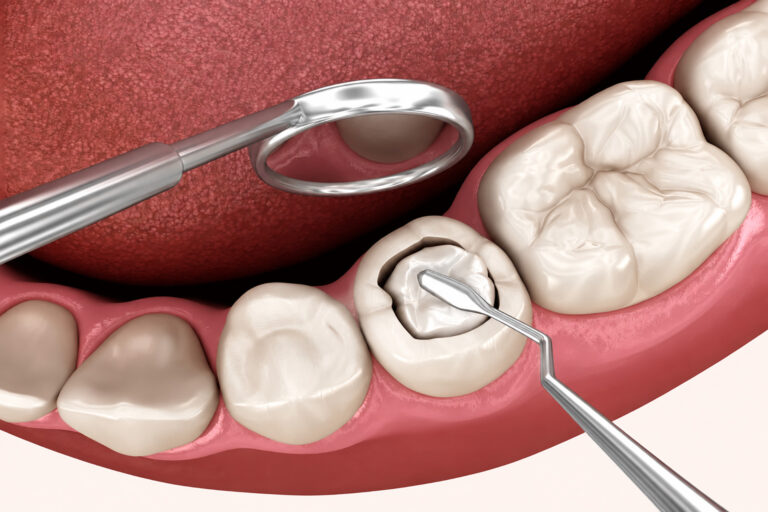
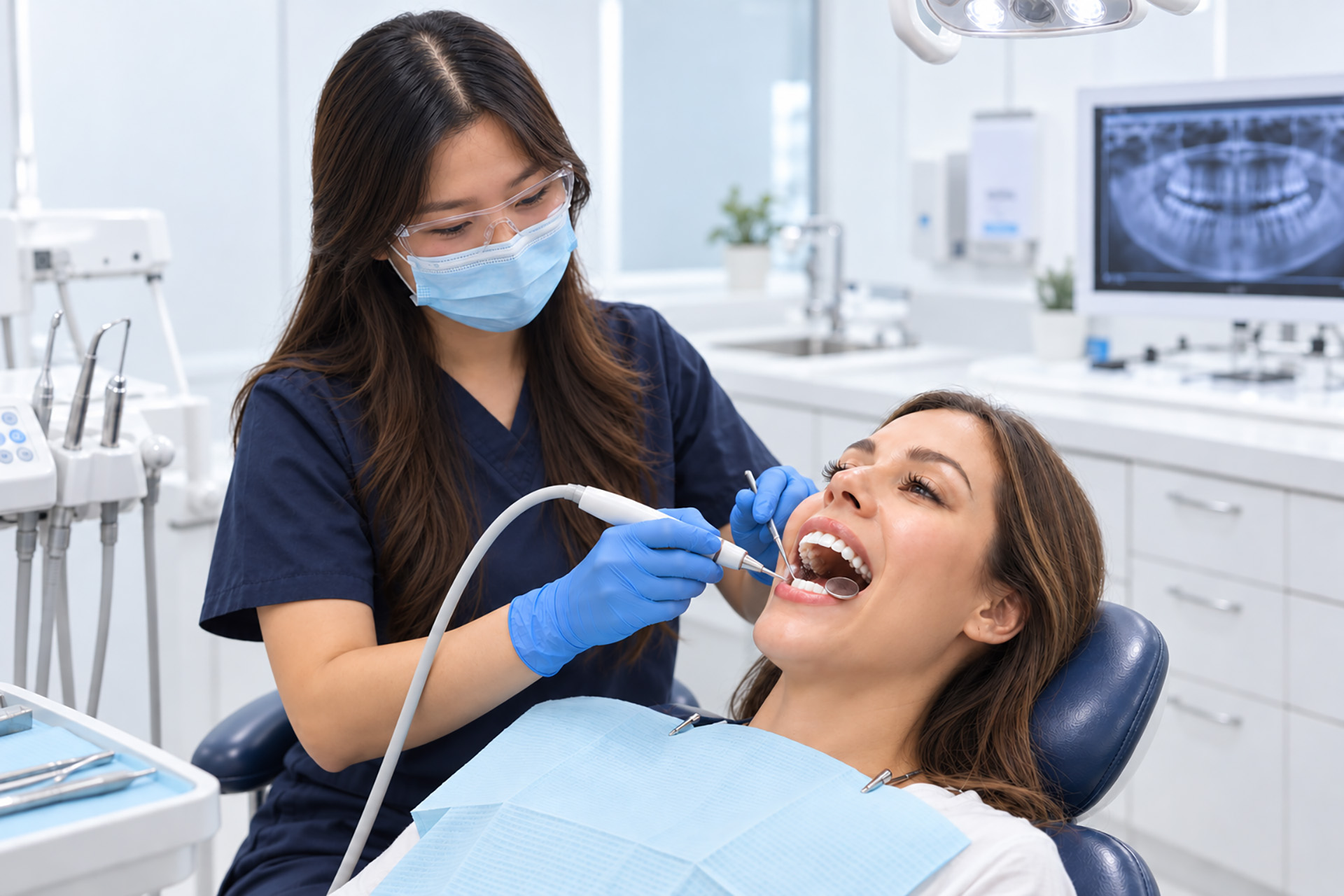
Dental scaling and polishing are professional teeth-cleaning procedures. Dental scaling removes dental plaque and hardened tartar from the teeth and around the gum line. Polishing teeth removes surface stains and smooths the cleaned areas.
Clinicians often complete both procedures during the same visit. They support dental health and oral hygiene alongside regular dental check-ups, brushing, and interdental cleaning.
What is Scaling and Polishing?
Dental scaling and polishing are different parts of a professional dental cleaning.
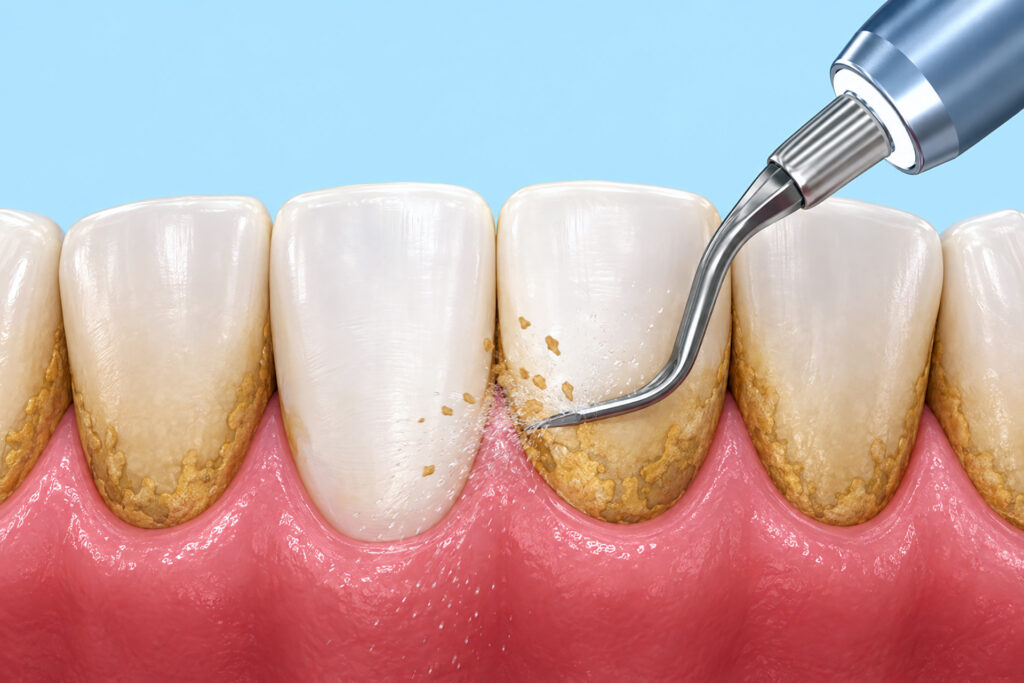
Dental plaque is a soft, sticky film of bacteria that forms on your teeth each day. Brushing and cleaning between the teeth can remove much of it. However, remaining plaque can absorb minerals from saliva and harden, a process called tartar formation. Once tartar has formed, brushing and flossing alone cannot remove it.
Dental scaling uses dental instruments to remove plaque and tartar from accessible tooth surfaces and around the gum line. The polishing procedure uses a rotating soft rubber cup or brush with a mildly abrasive paste. This polishing process removes some external stains and makes the cleaned areas feel smooth.
Routine dental scaling and polishing are different from scaling and root planing. Root planing is a deep cleaning treatment for periodontal disease. It cleans root surfaces and the deeper pockets below the gums in patients with periodontitis, whereas scaling and polishing do not address the gums.
Why is Scaling and Polishing Done?
Dental scaling and polishing remove deposits that daily oral hygiene cannot fully clear. Regular dental cleanings can help you maintain oral hygiene and healthy teeth, but they cannot remove some forms of tartar.
Dental plaque accumulating around the gum line can cause gingivitis. This early form of gum disease may make the gums red, swollen or prone to bleeding. Additionally, tartar buildup creates a rough surface that can retain more plaque and make your teeth harder to clean.
Removing dental plaque and tartar helps control factors that contribute to gum inflammation and tooth decay. The procedure may help prevent gum disease when combined with good oral hygiene. Brushing with fluoride toothpaste, cleaning between the teeth and limiting frequent sugar exposure remain important for maintaining oral health.
Teeth scaling and polishing may also:
- Remove some stains caused by coffee, tea, tobacco and certain foods.
- Improve bad breath when dental plaque, tartar buildup or trapped debris contributes to it.
- Leave the teeth smooth and feeling clean.
- Allow the dental professional to examine the teeth and gum line more clearly.
This dental procedure cannot treat every cause of bad breath, remove internal tooth discolouration or treat established periodontal disease. It is not a teeth-whitening treatment and does not change the natural colour of tooth enamel.
When Might You Need Scaling and Polishing?
Your dentist may recommend dental scaling and polishing when an examination finds dental plaque, tartar buildup, surface staining or gum inflammation that home care cannot adequately manage.
Possible signs include:
- Visible hard deposits on the teeth.
- Bleeding gums during brushing or interdental cleaning.
- Redness or swelling around the gum line.
- Persistent bad breath.
- A rough or coated feeling on the teeth.
Some people accumulate tartar more readily because they have crowded teeth, wear braces, have dry mouth, or have hard-to-clean areas. Tobacco use and inconsistent dental hygiene can also increase plaque and stain accumulation.
Bleeding, swollen, or receding gums can signal gum disease, which can progress and contribute to tooth loss if left untreated. A dental examination is needed to determine whether basic scaling is appropriate or whether periodontal assessment and treatment are required.

What Happens during a Scaling and Polishing Procedure?
A scaling and polishing visit usually includes an assessment, scale and polish, and a final review by your dentist.
Assessment
The dentist checks your teeth and gums before the dental cleaning. Tell the dentist about any sensitive teeth, bleeding, medical conditions, medicines and previous difficulties you have experienced during dental care.
Dental X-rays are not routinely needed for dental scaling and polishing alone. They may be recommended if symptoms or examination findings suggest tooth decay, bone loss, or another problem that cannot be fully assessed by looking inside the mouth, and that is not part of the regular scaling or polishing procedure.
Scaling
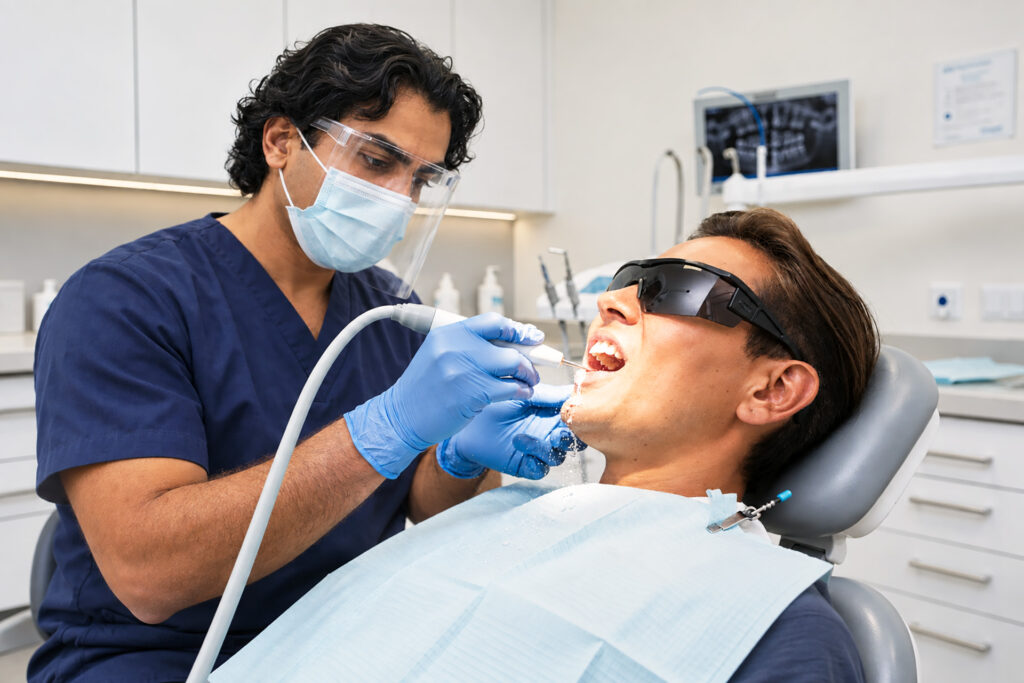
The dental scaling procedure removes plaque and tartar using an ultrasonic scaler, hand instruments or both.
An ultrasonic scaler produces rapid vibrations that loosen tartar from the tooth surface. A fine stream of water cools the instrument and washes away the loosened debris. Hand scalers are shaped to reach different tooth surfaces. They help remove plaque and tartar from specific areas and allow the dentist to check whether each surface is clean. Professional dental scaling may combine ultrasonic and hand instruments when deposits occur in different areas.
You may hear a buzzing sound and feel water, pressure or vibration. The time required for the scaling procedure depends on the amount and location of plaque and tartar.
Polishing
After dental scaling, the dentist may polish your teeth using a rotating soft rubber cup or brush and a special abrasive paste.
The polishing procedure removes some remaining surface stains. The polishing process also smooths out rough areas left after tartar removal. This, however, does not prevent new plaque from forming.
Polishing may be limited to teeth or areas with stains rather than performed on every surface. The dentist will consider your tooth sensitivity, exposed roots, restorations and the condition of the tooth enamel before starting on your polishing procedure.
Final review
The dentist will check the professionally cleaned areas and may explain where plaque tends to collect. Advice may include dental hygiene measures such as brushing with a soft-bristled toothbrush, using fluoride toothpaste, and flossing or using interdental brushes.
The full scaling and polishing procedure commonly takes about 30 to 60 minutes. The appointment may take longer if there is extensive tartar, significant staining, sensitive teeth, or a need for a detailed gum assessment. Most patients can return to their usual activities afterwards.
Is Scaling and Polishing Painful?
Dental scaling and polishing may feel unusual, but most patients experience pressure, vibration or mild sensitivity rather than pain.
Discomfort may be greater when the gums are inflamed, tooth roots are exposed, or tartar deposits are extensive. We can adjust the technique or ultrasonic scaler setting if you find it painful. We may consider local anaesthesia when clinically appropriate.
Inflamed gums may bleed slightly during professional dental scaling. Your teeth or gums may also feel tender or sensitive to temperature for a few hours afterwards. These effects are usually temporary. Contact your dental clinic if your pain is severe, worsens, or does not settle within a day.
How Often Should You Have Scaling and Polishing Done?
How often you need dental scaling and polishing depends on your gum health, oral hygiene, tartar accumulation, and risk of oral disease.
Most people have professional cleaning approximately every six months, often at the same visit as a routine dental check-up.
Someone with good oral health, healthy gums and little tartar may need dental scaling less frequently. Someone who develops deposits quickly may need professional cleanings more often. Your dentist should recommend a treatment plan after assessing your teeth, gums and individual risk.
Regular dental check-ups also allow your dentist to monitor changes in your oral health. See your dentist regularly at the interval recommended for you.
Does Scaling and Polishing Whiten Teeth?
Dental scaling and polishing can make teeth appear cleaner by removing some external stains, but the procedure does not bleach the teeth or change their natural colour.
Stains caused by tea, coffee, tobacco, and some foods may respond to polishing. Removing them can reveal more of the teeth’s natural shine and may produce a brighter smile. However, discolouration within the tooth will not respond to polishing.
If your tooth colour remains a concern, a dentist can assess the cause and explain whether professional teeth whitening may suit you.
Scaling and Polishing Aftercare
Most patients can return to their usual activities immediately after routine dental scaling and polishing.
You can generally eat and drink normally. If your dentist applied fluoride, follow their instructions, as you may need to wait a while before eating or drinking. If your teeth feel sensitive, lukewarm foods and drinks may be more comfortable for a few hours.
To maintain healthy teeth and support long-term dental health:
- Brush twice a day with a soft-bristled toothbrush.
- Clean between your teeth daily with floss or interdental brushes.
- Clean carefully along the gum line.
- Limit how often you consume sugary foods and drinks.
- Avoid tobacco.
- Attend regular dental check-ups and have your teeth cleaned as advised.
Good oral hygiene at home and professional cleaning work together to keep your teeth healthy and help prevent gum disease. These habits will help remove plaque before it hardens and support your optimal oral health. However, they cannot remove tartar that has already formed.
Scaling and Polishing Price in Singapore
Prices vary based on the time required and your individual clinical needs. Dental clinics may use different fee structures. The dentist will assess your mouth and explain the expected treatment and the cost of scaling and polishing.
At TEETH @ Tiong Bahru, dental scaling and polishing typically range from $98.10 to $174.40.
A consultation, dental X-rays, fluoride application or periodontal treatment may be charged separately when clinically indicated.
Scaling and Polishing at TEETH @ Tiong Bahru
If you are considering scaling and polishing in Singapore, consider reaching out to us at TEETH @ Tiong Bahru. Dental scaling and polishing at TEETH @ Tiong Bahru begins with an assessment of your teeth and gums. The dentist will determine whether routine teeth cleaning is appropriate or whether another form of gum care is needed.
If you have visible tartar, bleeding gums, persistent bad breath, or are due for a professional teeth cleaning, you can schedule an assessment appointment at our Tiong Bahru clinic.
Frequently Asked Questions
Can tartar be removed by brushing?
No. Brushing and interdental cleaning can remove plaque, but they cannot remove tartar once it has hardened. Tartar requires professional dental instruments used by a dentist.
Can scaling damage tooth enamel?
Scaling is intended to remove deposits without removing healthy enamel. Temporary sensitivity may occur, particularly when tartar has previously covered an exposed root, or the gums are inflamed. The dentist will select instruments and settings based on the condition of your teeth and adjust them if you experience discomfort.
Is scaling and polishing the same as deep cleaning?
No. Routine scaling and polishing will remove accessible deposits from the teeth and around the gum line. Deep cleaning will treat periodontal pockets and root surfaces in those with gum disease.
Will scaling and polishing stop bad breath?
It may improve bad breath caused by plaque, tartar or trapped debris. Bad breath may also be related to the tongue, dry mouth, tobacco use, diet, gum disease, or a medical condition. A medical specialist should assess persistent bad breath.