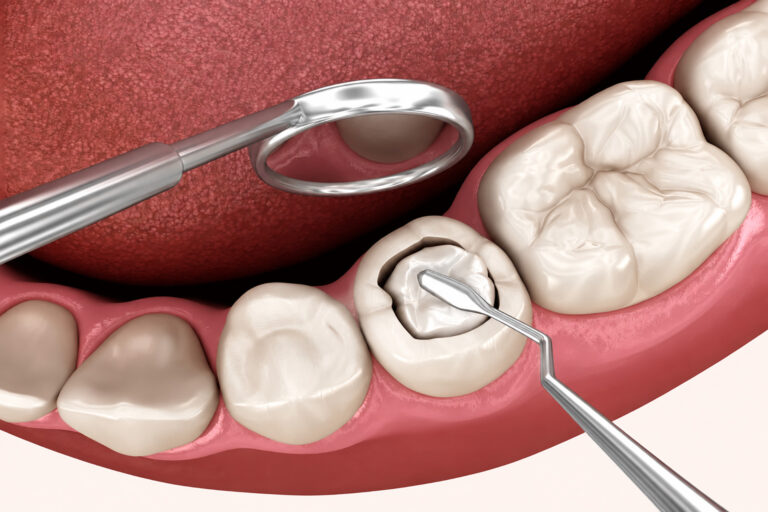

What Is a Periodontal (Gum) Abscess?
A periodontal (gum) abscess, also called a gingival abscess, is a localised collection of pus in the gums and soft tissues around a tooth. It is a form of dental abscess that develops when bacteria invade a periodontal pocket or enter the gum through trauma, debris, or an existing area of gum disease. Unlike a periapical abscess, which starts from the pulp inside the tooth, a periodontal abscess begins in the gum and periodontal tissues around the tooth root.
A periodontal abscess is often linked to periodontitis, especially when deep periodontal pockets make it easier for bacteria to build up below the gumline. It may also occur when a foreign body, such as food, becomes lodged in the gum, or when there is injury, a cracked tooth, or a local defect that allows infection to collect.
As the infection can quickly damage supporting tissue, a periodontal abscess is treated as a dental emergency rather than something to watch at home. Left untreated, a gum abscess can spread to deeper tissues.
Periodontal Abscess Symptoms
Gum abscess symptoms often include a swollen, tender gum bump, throbbing pain, a bad taste, and pain when chewing. Many people first notice a gum abscess as a boil-like swelling or a painful bump on the gum that appears darker or fuller than the surrounding tissue. The area may feel red, sore and tender to the touch, and the adjacent tooth may feel slightly raised or exhibit increased mobility. A gingival abscess may also produce pus, which can leave a bad taste or smell in the mouth.
Other gum abscess symptoms may include:
- Pressure
- Heat sensitivity
- Tenderness on biting
- Swollen gums
- Swollen lymph nodes
- Fever
- Feeling generally unwell
These symptoms can worsen quickly. Some abscesses are very painful, while others drain on their own and become less painful for a time. Even when the pain eases, the infection has not truly resolved. That is why a draining gum abscess still needs treatment, as the gingival abscess remains active beneath the surface.
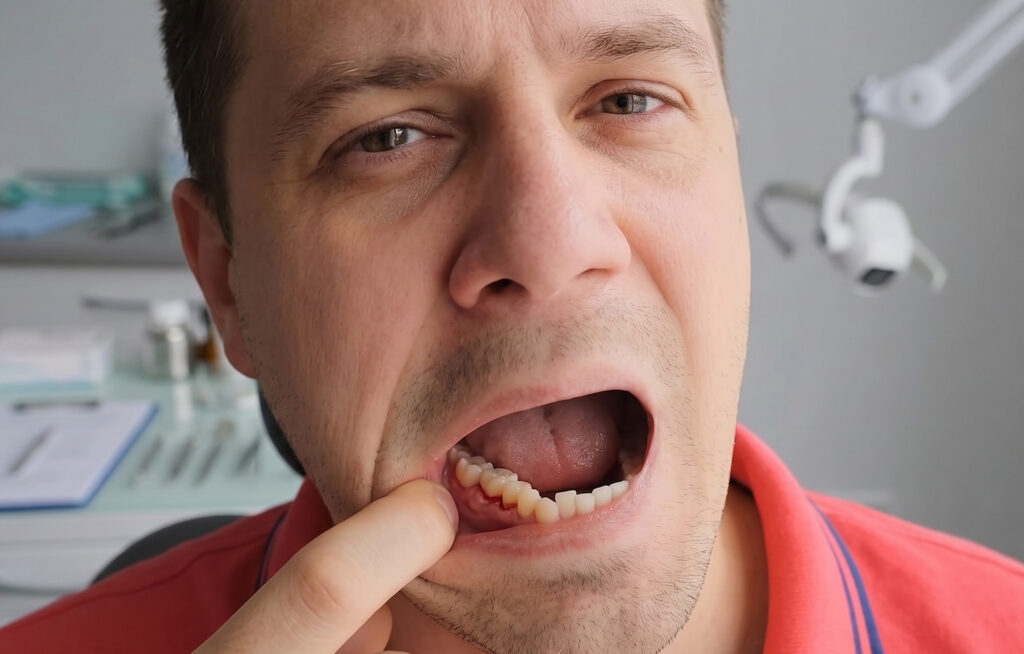
What Causes a Periodontal Abscess?
A periodontal abscess is usually caused by bacteria entering a deep gum pocket or becoming trapped in diseased gum tissue, where the gum abscess takes hold. Poor oral hygiene and untreated periodontal disease allow plaque bacteria to accumulate, and this infection can progress to a periodontal abscess or, if it involves the pulp, a tooth abscess.
Periodontitis is the most common indicator because deep pockets provide an enclosed space where bacteria, pus and debris can collect. In some cases, the trigger is local rather than general, such as food impaction, gum trauma, a cracked tooth, a root groove, or infected gum tissue around a damaged restoration, which makes cleaning difficult.
There are no formal stages of gum abscesses in everyday dental care, unlike those of periodontitis. Most periodontal abscesses fall into acute or chronic patterns, and the dentist will assess how deep it is, whether it is draining, and whether the infection has started to affect the tissues surrounding the tooth. An acute periodontal abscess is usually painful, tender and associated with pus. A chronic gingival abscess may drain through a sinus tract and cause milder or intermittent discomfort.
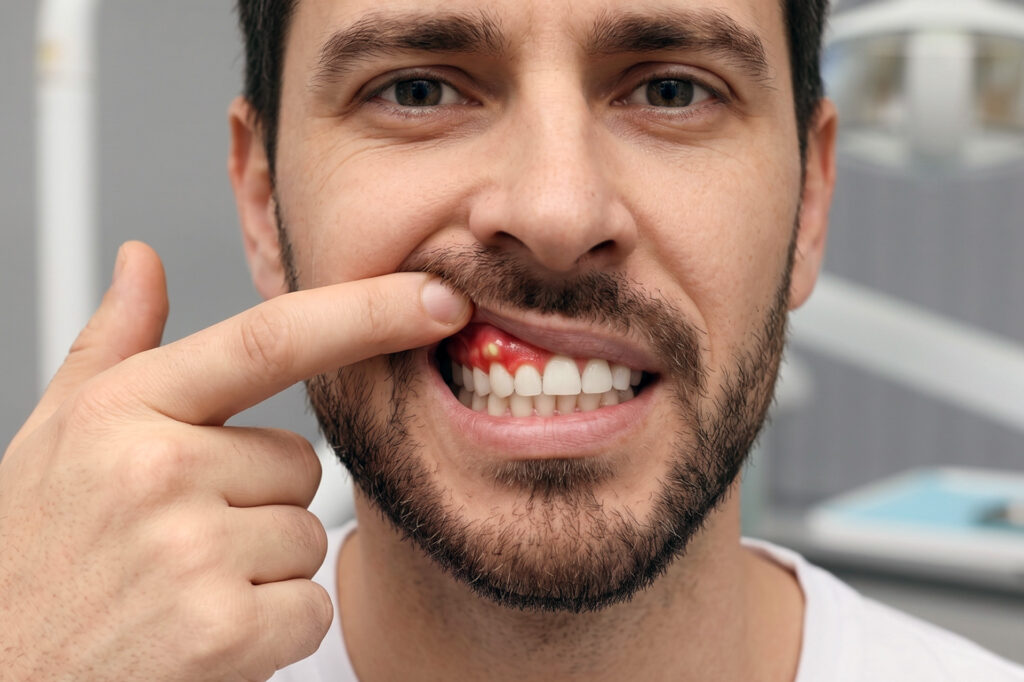
When to See a Dentist
You should see a dentist promptly if you have symptoms such as a swollen or painful gum lump, pus, fever, or pain that makes it hard to chew. A periodontal abscess is not something that should be left untreated to settle on its own, because draining a gum abscess on its own is not enough. Even if it bursts and the pressure decreases, bacteria may still remain deep in the tissues, and the underlying cause remains. Prompt treatment matters for a periodontal abscess.
Urgent same-day assessment is especially important if you develop a fever, chills, difficulty swallowing or breathing, nausea, vomiting, or pain that is not controlled with the usual pain relief. For patients around the Tiong Bahru neighbourhood, early care at TEETH @ Tiong Bahru can make the difference between a more limited gum abscess treatment plan and a more complicated infection affecting the tooth, bone, or surrounding soft tissues.
Diagnosis
Dentists diagnose a periodontal abscess by examining the gums, measuring pocket depths, testing the involved tooth, and taking dental X-rays. Clinical examination helps identify the swelling, pus, tenderness, tooth mobility, and deep periodontal pockets. A tooth with a gum-related abscess usually still has a living nerve, so it reacts normally when the dentist tests it. This helps show that the infection is coming from the gums, not from the nerve inside the tooth.
X-rays are important because they help show bone loss, widening of the periodontal ligament, and whether the infection is more likely periodontal, endodontic, or a combination of both. Reaching the correct diagnosis matters because a periodontal abscess and an abscess from an infection inside the tooth can look similar to patients, but they are treated differently by the dentist.
Non-Surgical Management
Non-surgical management usually starts with drainage of the pus and the cleaning of the periodontal pocket to remove the source of infection. Gum abscess drainage is often the first step because it relieves pressure and reduces the bacterial load.
Draining the gingival abscess early also limits how far the infection can travel. This may be done through the periodontal pocket itself during careful debridement, or through a small incision over the most fluctuant part of the swelling when needed. Periodontal abscess drainage is often combined with the removal of any trapped foreign material, and deep scaling and root planing for underlying gum disease, antiseptic rinses, adjustments to plaque-retentive factors, and a close review once the acute phase has settled. Warm saltwater rinses can help with comfort and promote healing, but they do not cure the infection on its own.
Antibiotics are not always the main treatment. Antibiotics are generally used as an adjunct when there is systemic spread, fever, cellulitis, lymph node swelling, immune compromise, or when the clinician judges antibiotics are needed alongside drainage and cleaning of the periodontal abscess.
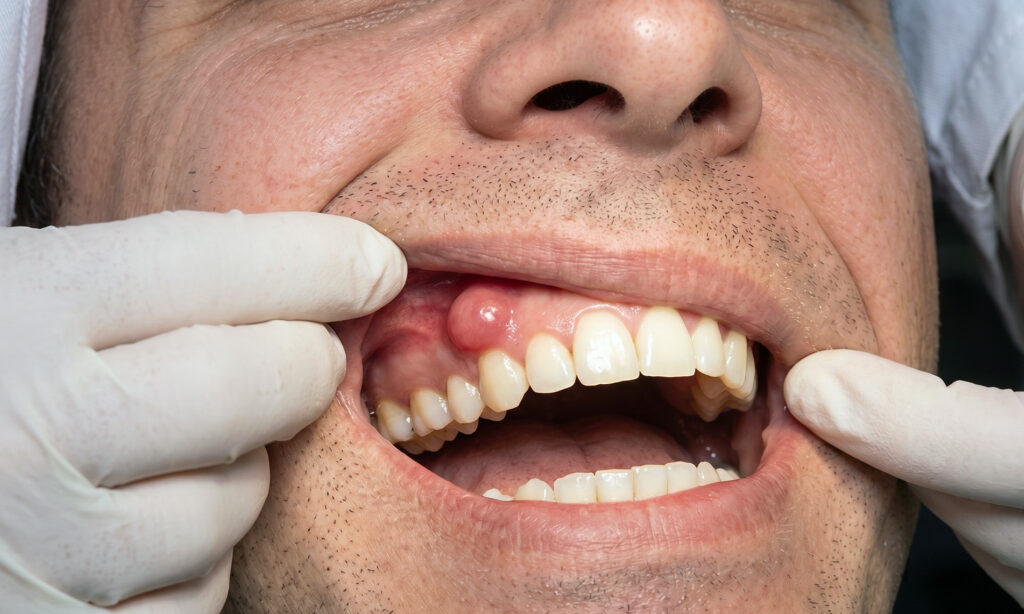
Surgical Options
Surgical treatment may be needed when the abscess is linked to deep periodontal defects, a persistent infection, or a tooth with a poor prognosis. In some cases, flap procedures or gingivectomy, a type of gum surgery, are used to gain access, remove deeper deposits, and reshape the affected area so it can be cleaned more effectively in the future. This kind of surgery is more likely when there are recurrent periodontal abscesses, a chronic abscess, or deeper vertical bone defects.
If the infection has spread into the pulp, root canal treatment may also be needed. If the tooth has become too compromised due to severe periodontal destruction or the abscess has rendered the prognosis hopeless, tooth extraction will be the most sensible option.
Risks and Recovery
Untreated periodontal abscesses can damage supporting tissues quickly and may lead to bone loss, tooth loss, or a wider spread of infection. A periodontal abscess can rapidly destroy the periodontal ligament and the surrounding alveolar bone, especially in teeth that already have attachment loss. In severe cases, bacteria from the mouth may spread further, leading to systemic infections and, rarely, sepsis.
Recovery is usually more predictable when drainage and cleaning happen early. Once the abscess is drained to relieve pain, the pressure eases, but the area still needs follow-up to ensure the deeper infection is resolving and that the cause has been controlled. Long-term prevention depends on managing the underlying periodontitis and periodontal disease, improving daily plaque control through good oral hygiene, and attending regular periodontal reviews.
How TEETH @ Tiong Bahru Can Help
TEETH @ Tiong Bahru can help by confirming whether the swelling is periodontal in origin, promptly draining the infection, and treating the underlying gum disease and periodontal disease that allowed it to form.
That means not only relieving the acute pain but also checking the pocket depth, tooth vitality, and X-rays to ensure the right source is being treated before the infection can spread. Where needed, care may include the drainage of gum abscesses, deep cleaning, antibiotics in selected cases, or a referral for more advanced periodontal treatment.
The most important part of treatment is preventing the gingival abscess from returning. A periodontal abscess will usually recur if the underlying pocket, plaque trap, or gum disease is left untreated, leading to recurrent abscesses. Early, structured dental care gives the best chance of preserving the tooth and protecting the surrounding bone. Schedule an appointment with TEETH @ Tiong Bahru today.