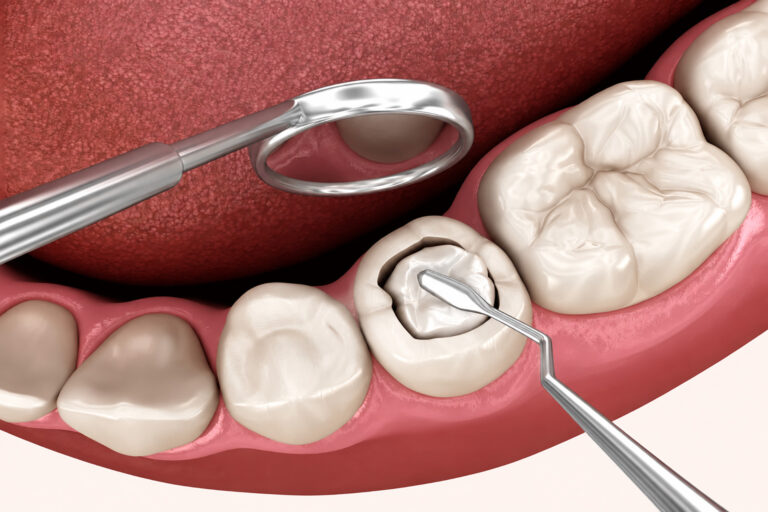

What Is Wisdom Tooth Extraction?
Wisdom tooth extraction is a routine dental procedure to remove one or more wisdom teeth when they cause symptoms or are likely to lead to dental problems.
Wisdom teeth are the third molars, the very last teeth at the very back of the mouth. These third molars typically emerge between ages 17 and 25 as they grow into place. Some come through fully, sit in the right position and can be cleaned well. These may not need removal and can be monitored during regular dental check-ups.
Problems often happen when there is not enough space for the wisdom teeth to emerge properly. It may become an impacted wisdom tooth, trapped partly or fully under the gum or jawbone. It may also come through at an angle or only partly erupt through the gum. This can create a space where food and bacteria collect.
Wisdom tooth surgery can be a simple extraction or a minor surgical procedure. A straightforward extraction is usually possible when it has fully erupted and can be removed without cutting the gum or removing bone. Impacted teeth are harder to extract than erupted ones because access is limited and they may be close to the bone, nerves or the second molar.

When Is Wisdom Tooth Extraction Needed?
Wisdom tooth extraction is usually needed when a wisdom tooth is impacted, infected, decayed, painful or damaging nearby teeth.
Dentists generally recommend wisdom tooth removal when the tooth lacks space to emerge properly. An impacted wisdom tooth or partly erupted wisdom teeth can lead to recurrent gum infections, tooth decay, gum disease, jaw pain, cysts, or damage to the second molar in front.
Common reasons for wisdom tooth removal in Singapore include:
- Pain or pressure at the back of the mouth
- Recurrent swollen gums around a partly erupted tooth
- Pericoronitis, which is an infection around the gum flap
- Tooth decay in the wisdom tooth or nearby molar
- Food trapping that cannot be managed with cleaning
- Cysts or other changes around the erupting molar
- Damage, crowding or resorption affecting nearby molars
- Difficulty opening the mouth because of inflammation
If the wisdom teeth are healthy, correctly positioned and easy to clean, they are usually left alone and reviewed over time. Monitoring may include periodic X-rays and checks for decay, gum pockets or changes in position.
Symptoms That May Need Urgent Care
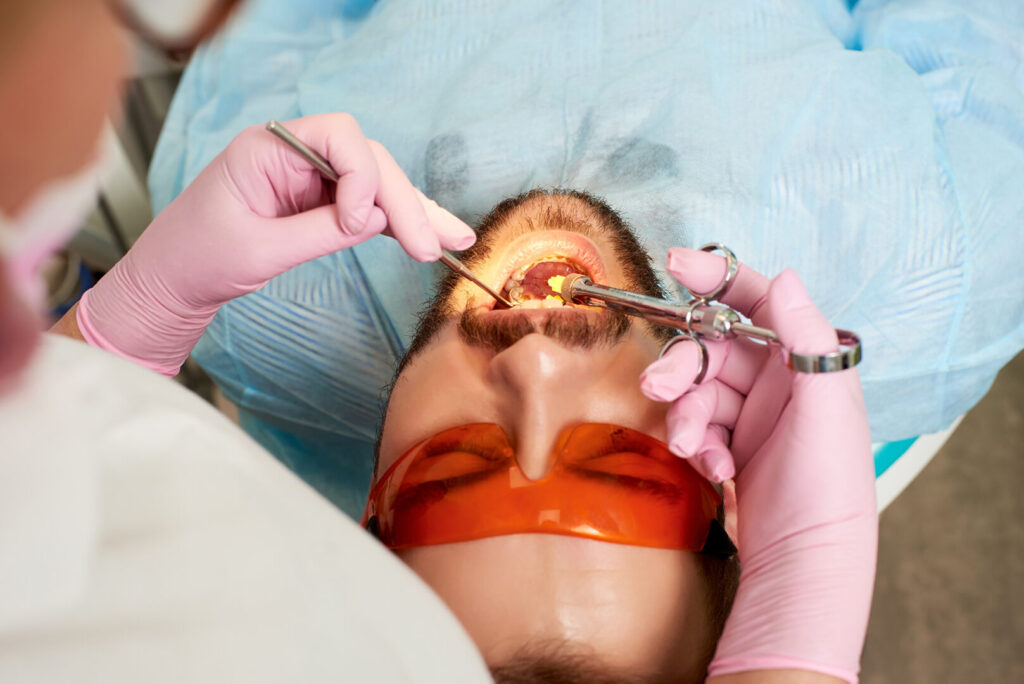
Emergency wisdom tooth removal may be considered when pain, swelling or infection cannot be controlled with routine dental care.
Not all wisdom tooth pain is an emergency. Mild discomfort during eruption may settle. However, urgent dental review is needed if symptoms suggest infection or pressure on nearby tissues.
Seek prompt care if you have:
- Severe wisdom tooth pain before removal
- Facial swelling or swelling under the jaw
- Fever or a general feeling of being unwell
- Pus, an unpleasant taste or a bad breath from the back of the mouth
- Difficulty swallowing
- Difficulty opening your mouth
- Pain that affects sleep, eating or your daily activity
Patients around Tiong Bahru and surrounding neighbourhoods who develop sudden swelling or worsening pain at the back of the mouth should arrange an early assessment at TEETH @ Tiong Bahru. Delaying care can allow infection to spread and may make treatment more complex.

Diagnosis and Treatment Planning for Wisdom Teeth
Diagnosis starts with an initial consultation, a thorough examination, and X-rays to assess the tooth position, root shape, infection risk, and proximity to nerves.
Before any wisdom tooth surgery, our dental surgeons assess the tooth, gum tissue, bite, and surrounding tissues. An X-ray is usually taken to see how the wisdom tooth is positioned. It shows whether it is fully erupted, partly erupted or impacted. It also helps assess the root shape, including any irregularities, the surrounding bone, the second molar, and its relationship to nearby nerves. In selected complex cases, a 3D scan may be recommended for more detailed planning.
The assessment helps the dentist review treatment options and decide whether the tooth can be removed with a simple extraction or requires a surgical extraction.

Wisdom Tooth Surgery Procedure
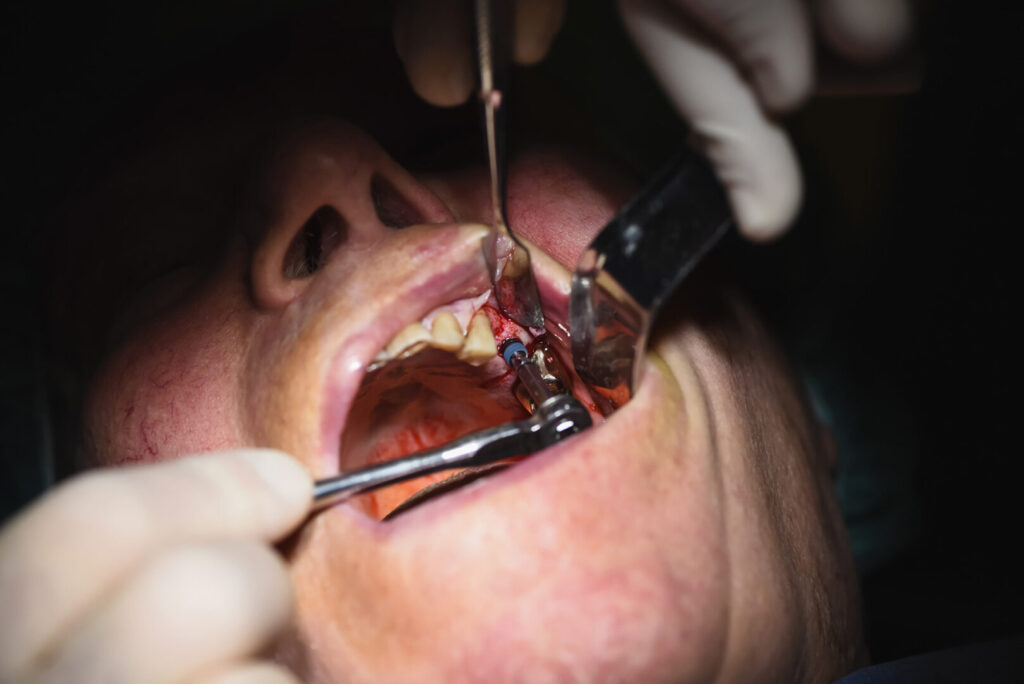
The wisdom tooth surgery procedure depends on the tooth position and whether it is impacted or buried. These are often quick and may take about 15 to 45 minutes. Oral surgery for wisdom tooth removal usually takes 30 to 60 minutes, although complex cases may take longer.
The process may include:
- Anaesthesia. The area is numbed with local anaesthesia. In most cases, local anaesthesia is enough.
- Access. For impacted molars, a small incision may be made in the gum tissue.
- Bone removal. Some bone removal may be needed if the bone blocks access.
- Sectioning. The wisdom tooth may be divided into smaller pieces to allow safe removal.
- Cleaning. The socket is cleaned and checked.
- Stitching. The gum may be closed with stitches to support the healing process.
You will go home the same day. The dental team will explain post-wisdom-tooth-extraction care and post-operative care instructions before you leave.
Wisdom Tooth Extraction Cost in Singapore
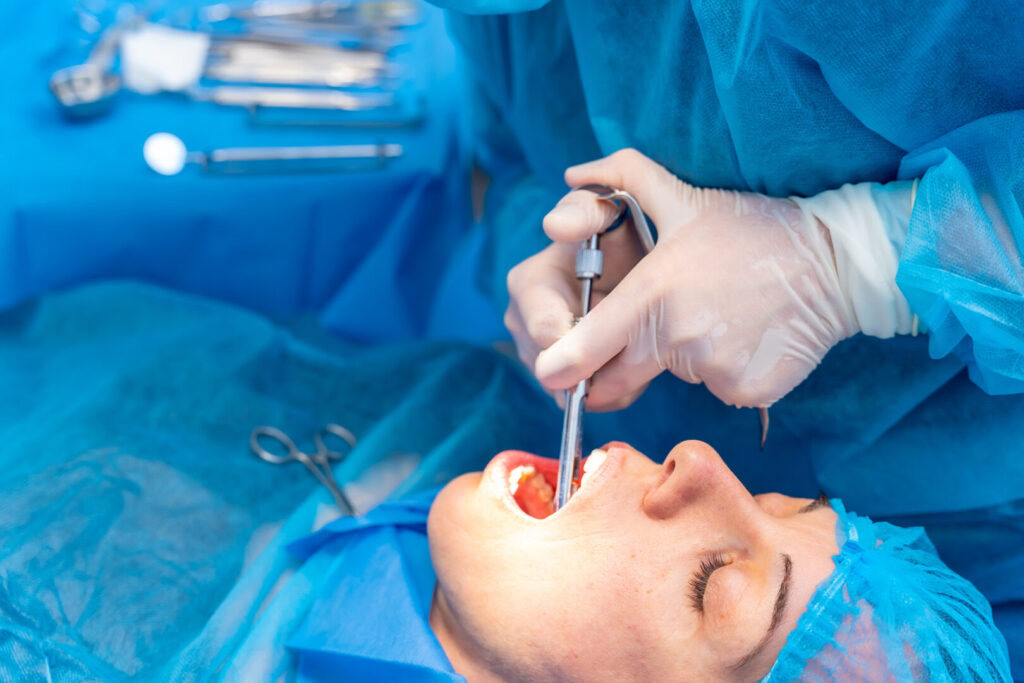
Wisdom tooth extraction cost in Singapore depends mainly on whether the tooth needs a simple extraction or wisdom tooth surgery. The price of wisdom tooth extraction at TEETH @ Tiong Bahru ranges from $872.00 to $1,526.00.
MediSave support for a wisdom tooth extraction may apply when the procedure is surgical and performed on eligible Singapore citizens and permanent residents. Simple non-surgical extractions are usually not claimable under MediSave. Our team at TEETH @ Tiong Bahru can confirm your eligibility for MediSave claims, the estimated claim amount, and the out-of-pocket cost before treatment.
Wisdom Tooth Extraction Recovery
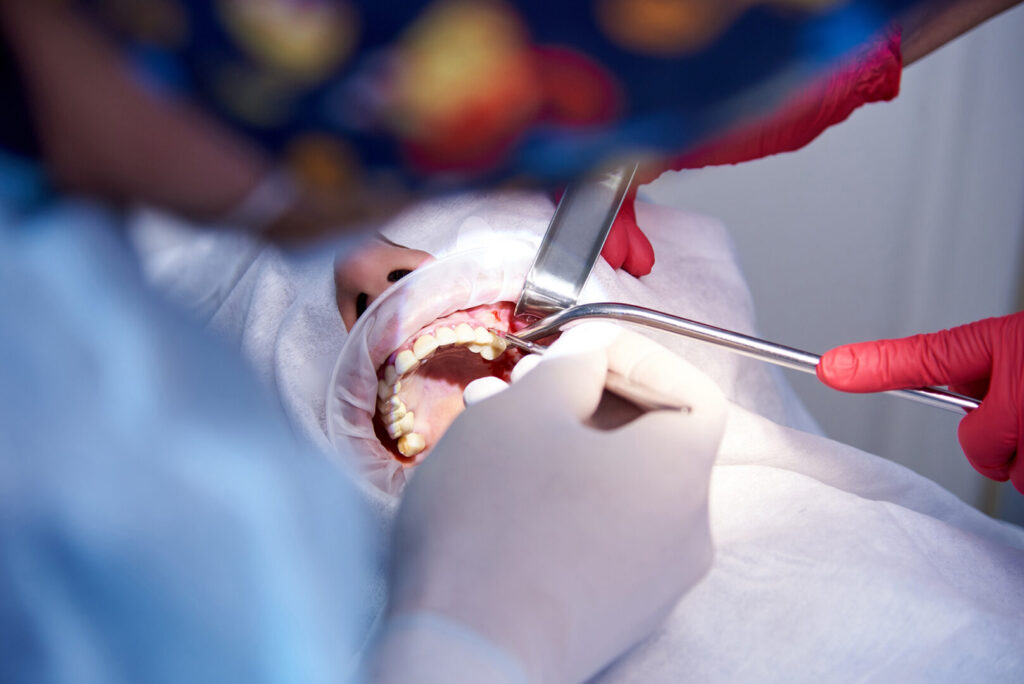
Wisdom tooth extraction recovery usually takes one to two weeks, depending on whether the removal was simple or surgical. Most patients return to their daily activities within a few days after a simple treatment.
Pain medicine and antibiotics are usually prescribed after wisdom tooth surgery when clinically appropriate.
- The first 24 hours are important because a blood clot forms in the socket. This protects the bone and nerves while healing begins. If the clot is dislodged, a painful condition called dry socket can occur.
- Mild swelling, discomfort and jaw stiffness are common for three to five days after wisdom tooth surgery.
- Some minor bleeding is expected on the first day, and most adults experience it briefly.
- Discomfort should gradually improve with rest, medication and proper care.
- Expect one to two days of medical leave for a simple extraction.
- Surgical extraction may require a longer recovery period, depending on the number of wisdom teeth removed, surgical difficulty and the patient’s recovery.
- Pain medicine and antibiotics are usually prescribed after wisdom tooth surgery when clinically appropriate.
Post Wisdom Tooth Extraction Care
Post-wisdom-tooth-extraction care focuses on controlling the bleeding, protecting the clot, reducing swelling, and keeping the mouth clean. Follow your dentist’s instructions closely. Good aftercare lowers the risk of infection, socket problems and delayed healing.
Important care steps include:
- Bite firmly on the gauze provided to control bleeding.
- Apply ice packs to the face as advised during the first day.
- Use painkillers, antibiotics or antiseptic mouthwashes only as directed.
- Eat soft foods such as porridge, yoghurt, soup, eggs, fish and beancurd.
- Drink enough water.
- Rest and avoid strenuous exercise for the first few days.
- Brush the rest of your teeth gently from day two onwards.
- Avoid disturbing the surgical site.
Bleeding after wisdom tooth surgery should decrease with firm pressure from a gauze pack. If bleeding is heavy, persists despite applying pressure, or recurs repeatedly, contact your dentist.

Dos and Don’ts After Wisdom Tooth Extraction
Dos and don’ts after wisdom tooth extraction help protect the healing socket and reduce complications.
If food feels trapped, follow your dentist’s cleaning instructions rather than trying to dig it out.
- Rest, take medicines as prescribed, use cold compresses when advised, and keep your mouth clean.
- Eat soft foods and chew away from the surgical area.
- Sleep with your head slightly elevated if swelling is present.
- Do not smoke or vape.
- Drink through a straw.
- Spit forcefully or rinse vigorously in the first 24 hours. Avoid vigorous rinsing while the clot forms.
- Avoid alcohol, hard foods, spicy foods and strenuous exercise until your dentist says it is safe.
- Do not poke the tooth socket with your tongue, fingers or toothpicks.

Risks and Possible Complications of Wisdom Tooth Extraction
Wisdom tooth surgery is common, but possible risks include dry socket, infection, bleeding, nerve damage, numbness and damage to nearby structures or sinuses.
Most patients heal without major problems. Still, every surgical procedure carries risks, and wisdom tooth surgery is no exception. These may include swelling, bruising, bacterial infection, an empty socket, prolonged bleeding, limited mouth opening and temporary numbness. Lower wisdom teeth close to the nerve may carry a higher risk of altered sensation in the lip, chin or tongue.
Upper wisdom teeth sit near the sinus. In uncommon cases, sinus irritation or communication may occur. Adjacent teeth, fillings or crowns can also be affected if the tooth position is difficult.
Careful diagnosis, X-ray planning and clear aftercare reduce risk and related complications. Contact your dentist if your pain worsens after several days, swelling increases, fever develops, pus appears, numbness persists, or bleeding does not settle.
How TEETH @ Tiong Bahru Can Help
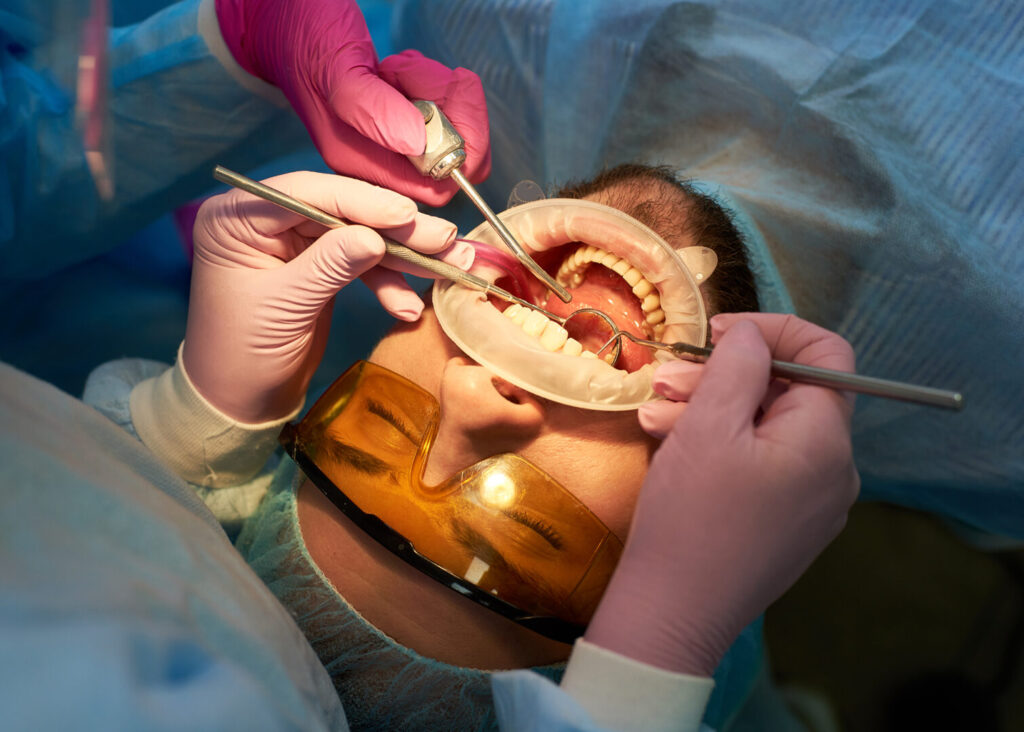
TEETH @ Tiong Bahru can assess wisdom tooth pain, explain whether removal is needed and guide you through your treatment and recovery. If your wisdom teeth are causing you pain or have erupted, contact our dental professionals today for an initial consultation.