
An impacted wisdom tooth is a third molar that cannot fully emerge because it lacks space or is blocked by another tooth, gum tissue or bone.
Impacted wisdom teeth may remain completely beneath the gum or emerge only partly. Some cause pain, infection or damage to adjacent teeth. Others remain symptom-free and can be monitored.
Most adults develop four wisdom teeth, which are the last adult teeth in the dental arch.
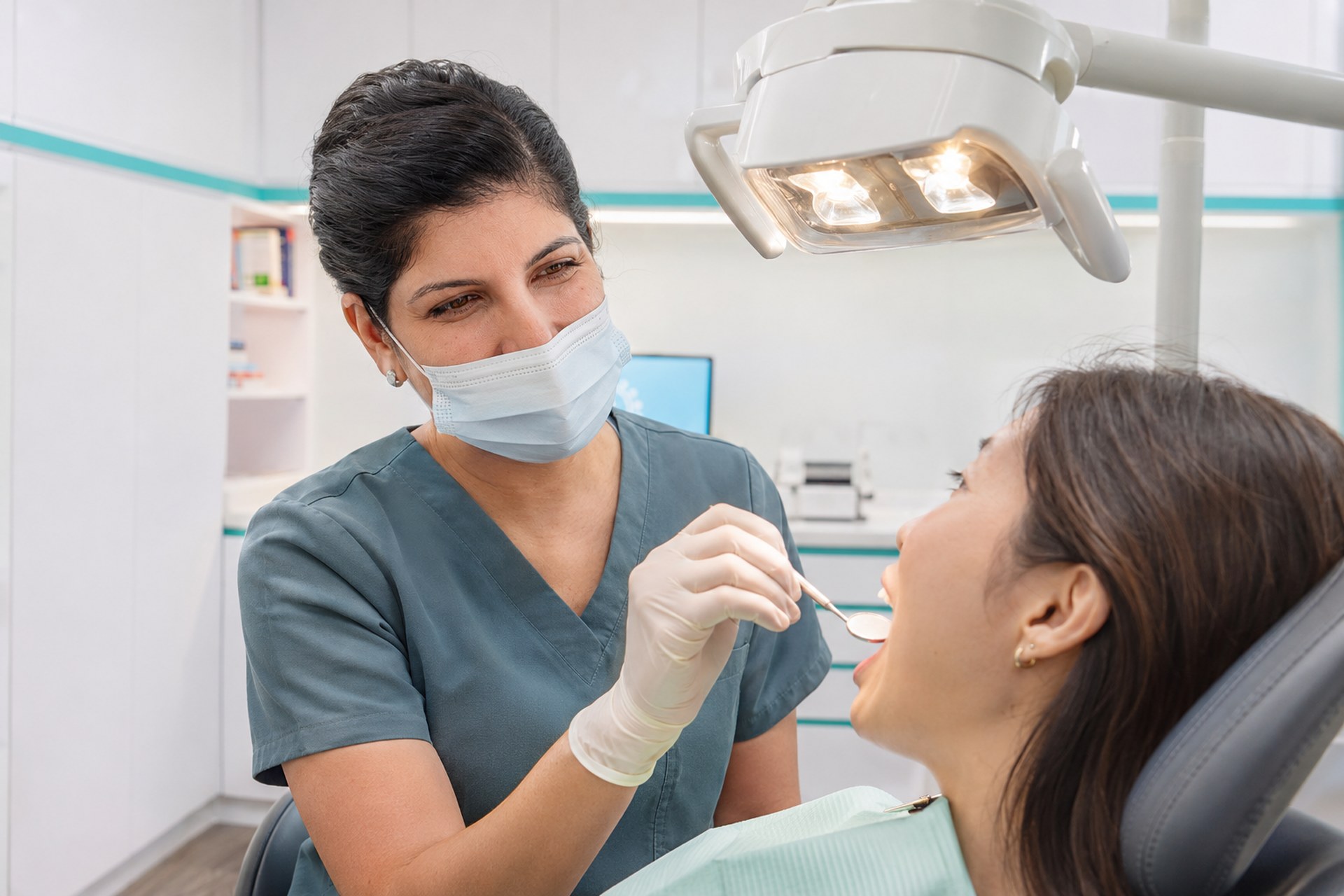
Impacted Wisdom Teeth at a Glance
| Feature | General information |
|---|---|
| Tooth involved | A third molar at the back of the mouth |
| Usual development | Wisdom teeth commonly attempt to erupt between ages 17 and 25 |
| Partial impaction | When part of the tooth has emerged through the gum |
| Full impaction | When the tooth remains beneath the gum, bone or both |
| Common symptoms | Pain, swollen gums, bad breath, unpleasant taste and difficulty opening the mouth |
| Assessment | Dental examination and X-rays |
| Management | Monitoring or removal, depending on symptoms and signs of disease |
| Urgent warning signs | Fever, spreading swelling, difficulty swallowing or difficulty breathing |
What Are Impacted Wisdom Teeth?
Wisdom teeth are the third molars at the back of the mouth. They usually develop after the other adult teeth.
A wisdom tooth becomes impacted when it does not have enough room to erupt normally. It may remain beneath the gum or jawbone, emerge only partly or grow at an angle.
An impacted tooth does not always cause problems. Monitoring or removal depends on its position, symptoms, how well it can be cleaned, and its effects on oral health, other teeth, and nearby tissues.
Partially and Fully Impacted Wisdom Teeth
A partially impacted wisdom tooth has broken through the gum but has not fully erupted. Part of its crown remains covered by gum tissue. This can affect treatment options and decisions about removing the tooth.
Partially impacted teeth may be harder to clean, especially at the gum line. Food and bacteria can collect beneath the gum flap and along the gum line. This can cause gum inflammation or a bacterial infection known as pericoronitis.
A fully impacted wisdom tooth remains beneath the gum tissue, jawbone or both. It may stay symptom-free, but dental X-rays are needed to check its position and look for changes around the tooth.
Dentists may also describe an impaction by the tissue covering it:
- Soft-tissue impaction: The tooth has emerged from the bone but remains covered by gum.
- Partial bony impaction: Part of the tooth remains within the jawbone.
- Complete bony impaction: The tooth remains enclosed within the jawbone.
Types of Wisdom Tooth Impaction
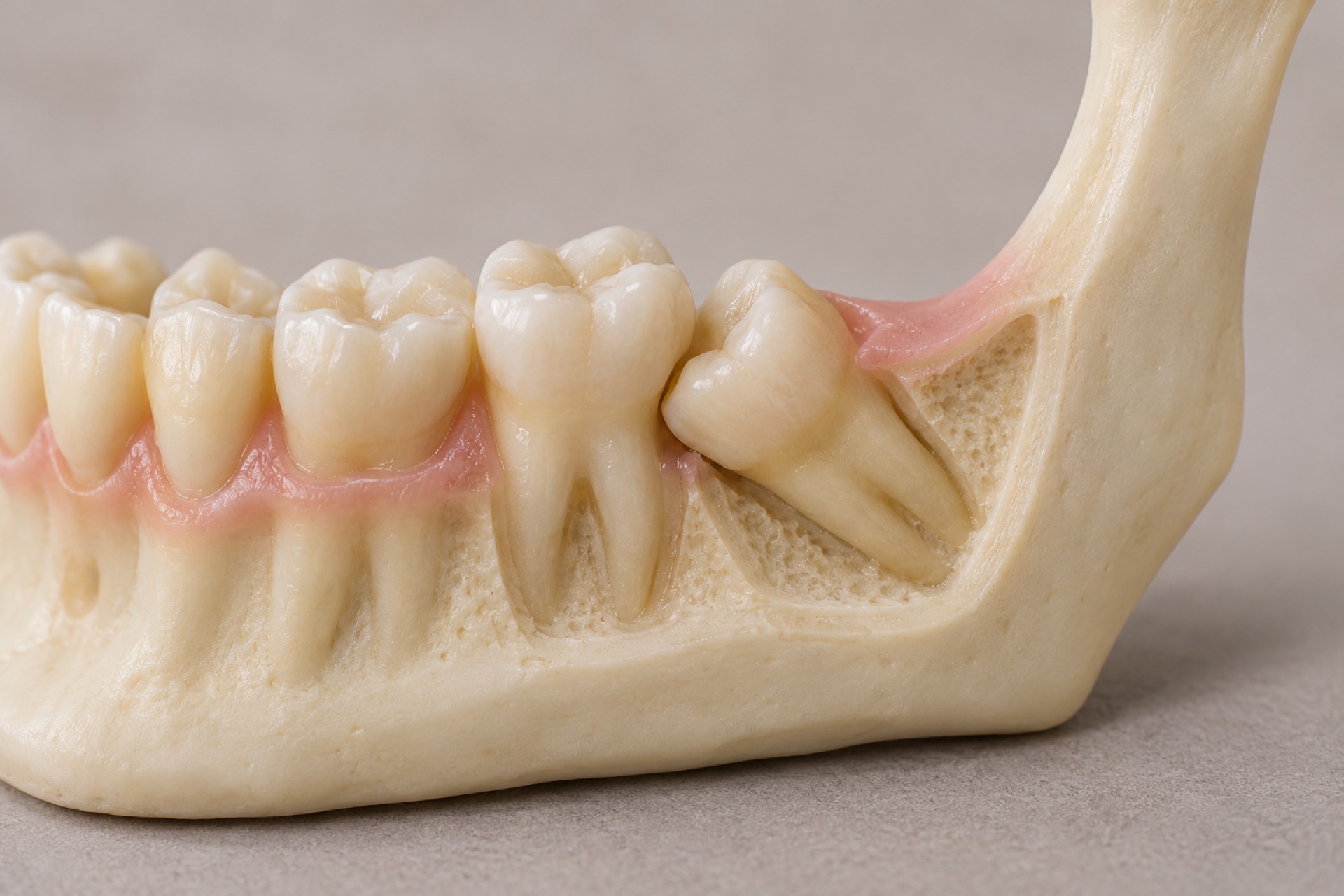
The tooth’s direction of growth helps the dentist assess the impaction and plan management. It also shows its relation to other teeth in the dental arch.
| Type | Tooth position |
|---|---|
| Mesial impaction | The wisdom tooth angles forward towards the second molar |
| Distal impaction | The wisdom tooth angles towards the back of the mouth |
| Vertical impaction | The tooth is relatively upright but remains partly or fully trapped |
| Horizontal impaction | The tooth lies sideways within the jaw and may press towards the second molar |
Mesial impaction is commonly encountered. However, the direction alone does not determine whether removal is required. The dentist also considers depth, root shape, available space, and the relationship to nearby structures before deciding on removal or continued monitoring.
Impacted Wisdom Teeth Symptoms
Impacted wisdom teeth do not always cause symptoms, as the direction and nature of impaction can determine its effect. When symptoms develop, they may include:
- Wisdom tooth pain or tenderness behind the last molar.
- Jaw pain or a sharp pain at the back of the jaw.
- Red, swollen or tender gums at the gum line.
- Food becoming trapped behind the second molar.
- Persistent bad breath or a bad taste.
- Pain when biting or chewing.
- Jaw stiffness.
- Difficulty opening the mouth fully.
- Facial swelling around the jaw or side of the face.
These symptoms can also occur with wisdom tooth decay, wisdom tooth infection, gum disease and other oral health conditions. A dentist needs to examine your teeth to identify the cause.
When to Seek Prompt Care
Arrange a prompt dental assessment if jaw pain, swelling or tender gums persist or worsen.
Seek urgent care if you develop:
- Fever with dental pain.
- Rapidly increasing facial, jaw or neck swelling.
- Pus or discharge from the gum.
- Severe difficulty opening your mouth.
- Difficulty swallowing.
- Difficulty breathing.
- A general feeling of being unwell with worsening dental symptoms.
These may signal a spreading infection. Timely intervention may prevent infection from extending into nearby tissues.
What Causes Wisdom Tooth Impaction?
Wisdom teeth become impacted when their eruption path is blocked, or there is insufficient space behind the second molars. A tooth may be in the correct position but still not have enough room to emerge.
Factors include:
- Limited space within the dental arch.
- The angle at which the tooth develops.
- Obstruction from the second molar or other teeth.
- Dense gum tissue or overlying bone.
- The tooth’s size and shape.
You cannot prevent the tooth’s position or angle of development, meaning there is no way to prevent impacted wisdom teeth. However, regular dental examinations can identify an impacted tooth before symptoms or potential complications develop.
Possible Complications
Untreated impacted wisdom teeth may cause dental problems and other potential complications. If disease is left untreated, damage to the affected area may progress into more serious conditions.
Pericoronitis
A partially erupted tooth can leave a flap of gum over part of the crown. Food, plaque, and bacteria may collect beneath the surrounding tissue, causing recurrent inflammation or gum infections. A dentist can catch this during regular check-ups and may advise you on how to care for that area of gum.
Read more about swelling around a wisdom tooth and pericoronitis.
Tooth decay
A partly erupted or angled tooth can be difficult to brush and clean between. Tooth decay may affect the wisdom tooth, the adjacent second molar or both. Regular dental visits can help catch tooth decay before it worsens.
Gum and bone damage
Plaque accumulation behind the second molar may contribute to gum disease, a deep gum pocket, inflammation and loss of supporting bone.
Damage to the adjacent molar
Contact or pressure from an impacted tooth may be associated with decay or external root resorption of the neighbouring second molar. Root resorption means that part of the tooth root is gradually lost. Other adjacent teeth are less commonly affected. This is a common cause of pain from impacted wisdom teeth.
Dental cyst
Fluid-filled cysts can occasionally form around the crown of an unerupted tooth. As a cyst enlarges, it may damage surrounding teeth, bone or nearby nerves. This is a rarer problem arising from impacted wisdom teeth, but a dentist should address it swiftly.
These complications are possible, not inevitable. Regular monitoring supports oral health and helps identify changes that may not produce early symptoms.
How Impacted Wisdom Teeth Are Diagnosed
Diagnosis usually includes:
- A review of your symptoms and dental history.
- An examination of the gums, wisdom tooth area and adjacent teeth.
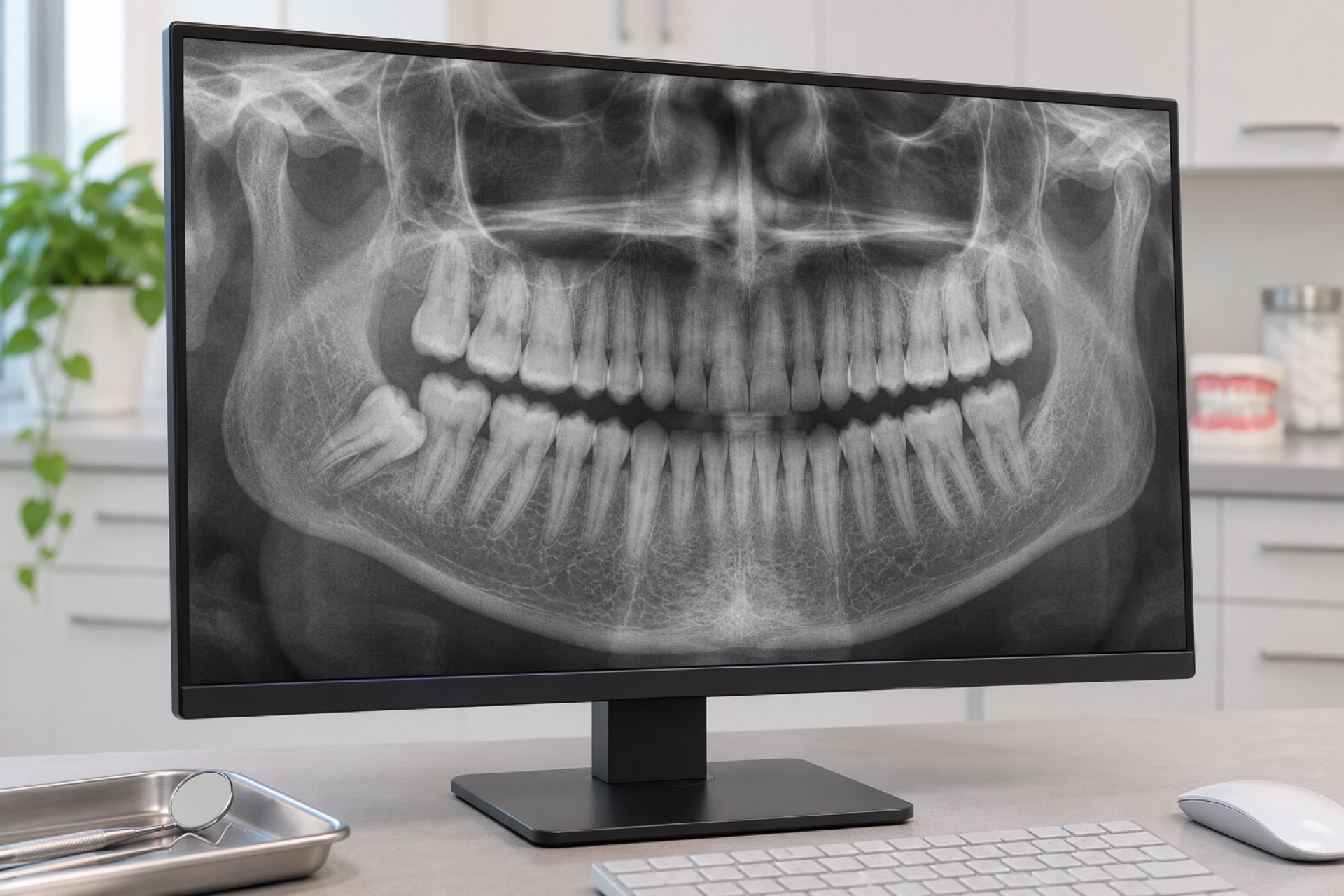
- Dental X-rays to assess the tooth’s angle, depth and root shape.
- Evaluation of the neighbouring second molar and surrounding bone.
- Assessment of the tooth’s relationship to nearby nerves or the maxillary sinus.
A panoramic dental X-ray often provides the required overview. A three-dimensional scan may be recommended in selected cases when more detail is needed. The findings help your dental professional form an appropriate treatment plan.
Do Impacted Wisdom Teeth Need Removal?
Not every impacted wisdom tooth needs wisdom tooth removal.
Monitoring may be suitable when the tooth:
- Causes no symptoms.
- Shows no evidence of decay, infection, cyst formation or gum disease.
- Is not damaging the adjacent molar.
- Can be reviewed through regular examinations and dental X-rays.
Wisdom tooth removal may be recommended when the tooth causes:
- Persistent or recurrent pain.
- Repeated pericoronitis or infection.
- Decay that cannot be treated predictably.
- Gum or bone damage.
- Damage to the adjacent second molar.
- Root resorption.
- A cyst or another pathological change.
Evidence does not establish that every asymptomatic, disease-free impacted wisdom tooth should be removed. However, if the tooth is retained, regular clinical and radiographic monitoring is important.
Impacted Wisdom Teeth Treatment
Treatment depends on whether the tooth is healthy, symptomatic or causing damage. Findings guide the treatment plan and whether wisdom tooth removal is appropriate.
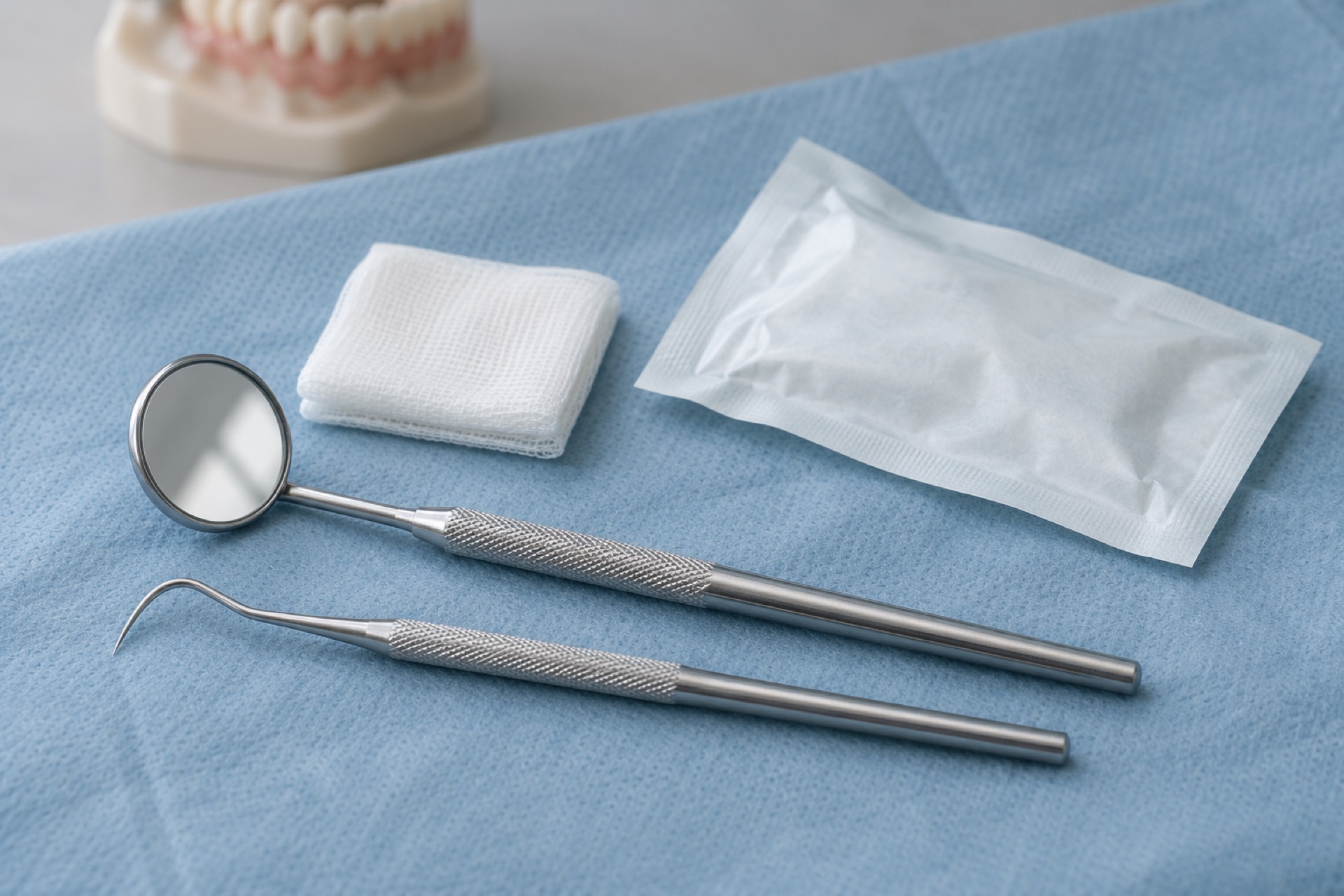
Monitoring
Monitoring may include regular dental care, updated X-rays and checks of the wisdom tooth, second molar, gums and surrounding bone.
Proper care, including good oral hygiene, can reduce plaque and food accumulation around a partially erupted tooth and help prevent infection.
Managing inflammation or infection
The dentist may clean beneath the gum flap and advise appropriate dental care. Based on clinical findings, the dentist may consider pain medicine, antiseptic rinses, or antibiotics.
Antibiotics are not a permanent solution for a tooth that repeatedly causes infection. Recurrent pericoronitis may lead the dentist to discuss removal.
Impacted Wisdom Tooth Surgery
Impacted wisdom teeth often require a surgical extraction because part or all of the tooth remains beneath the gum or bone.
The impacted wisdom tooth extraction procedure commonly uses local anaesthesia. Sedation or general anaesthesia may be considered in selected cases based on complexity, patient needs and the treatment setting. The degree of impaction typically does not determine the level of anaesthesia; meaning general anaesthesia is not required because the tooth is fully impacted.
Dentists and oral surgeons assess the tooth’s position before surgery. Oral surgeons may manage more complex cases. The dentist or dental surgeon may make a small incision, remove a limited amount of bone and divide the tooth into sections when necessary. Like any invasive procedure, wisdom tooth removal carries risks.
Monitoring Your Wisdom Teeth
You cannot prevent a wisdom tooth from becoming impacted. You can reduce the risk of complications by:
- Brushing carefully around the back molars.
- Cleaning between accessible teeth.
- Attending regular dental examinations.
- Having X-rays when clinically recommended.
- Reporting recurring pain, swelling, bad breath or an unpleasant taste.
Do not ignore a symptom-free tooth indefinitely. Monitoring supports timely intervention, helps prevent complications and allows the dentist to identify changes in the wisdom tooth, adjacent molar or surrounding bone.
Impacted Wisdom Tooth Assessment at TEETH @ Tiong Bahru
A proper dental assessment can determine how an impacted wisdom tooth affects oral health, whether it requires monitoring and whether it may benefit from removal.
The dentist will examine the area, review your symptoms and use appropriate dental imaging to assess the tooth’s position and nearby structures. You should receive an explanation of the findings, management options, material risks and relevant fees before deciding. If you have impacted wisdom teeth or are concerned about them, call us today to make an appointment at TEETH @ Tiong Bahru.