What Is Root Canal Treatment?
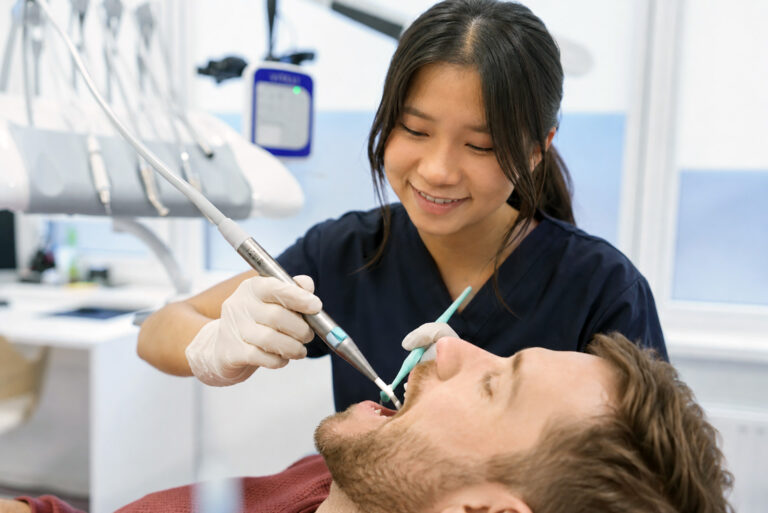
Root canal treatment is a dental procedure that is commonly performed to save and preserve the natural tooth. Also called root canal therapy or endodontic treatment, it removes infected or inflamed pulp from inside a natural tooth, allowing the tooth to be cleaned, sealed, and preserved.
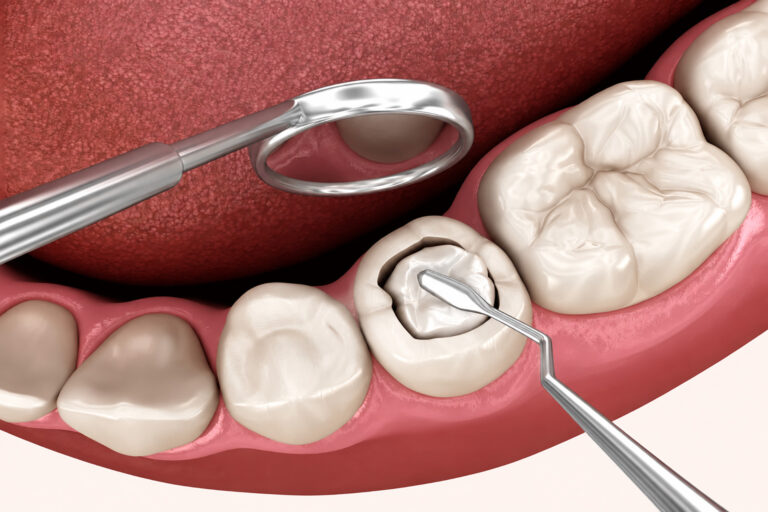
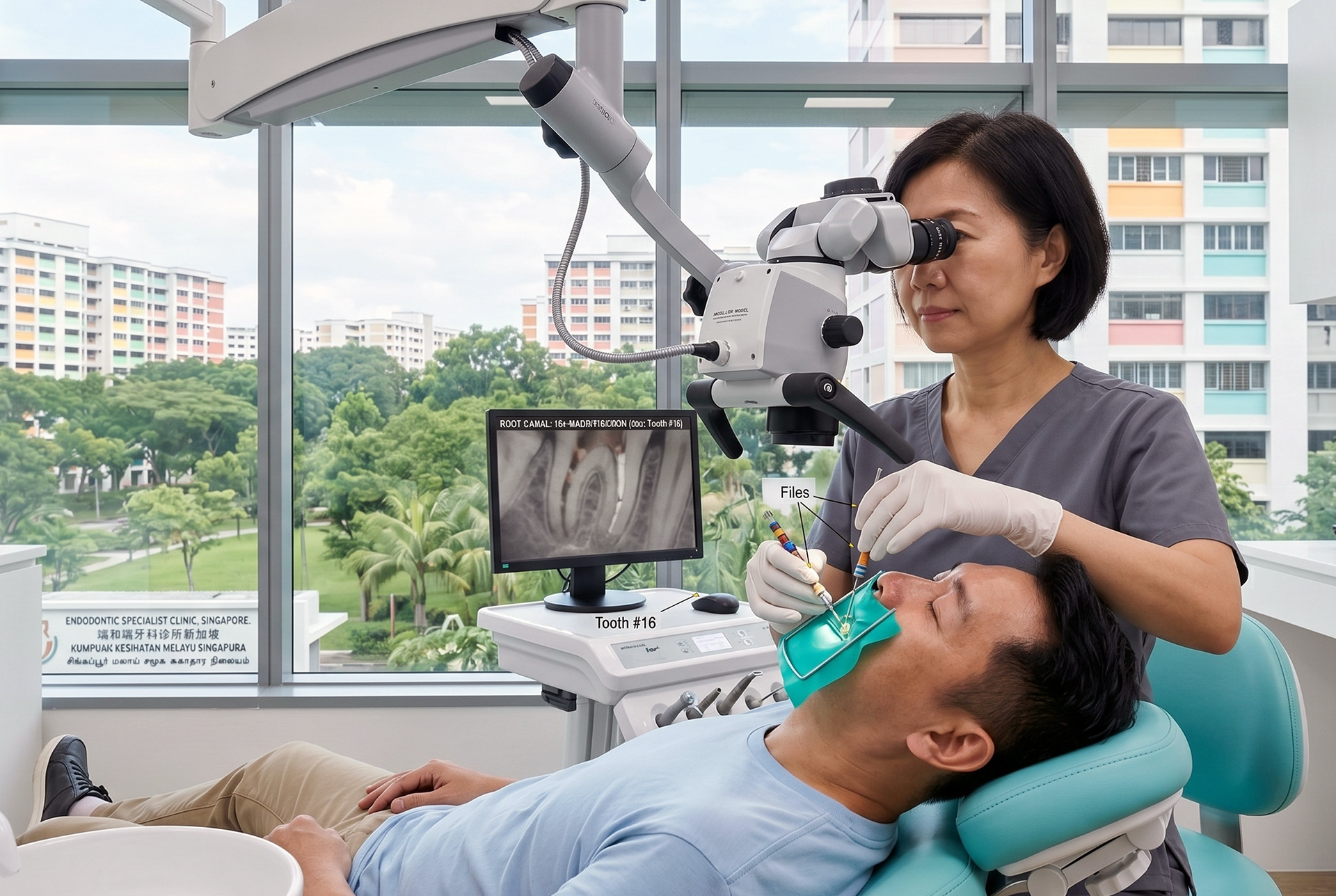
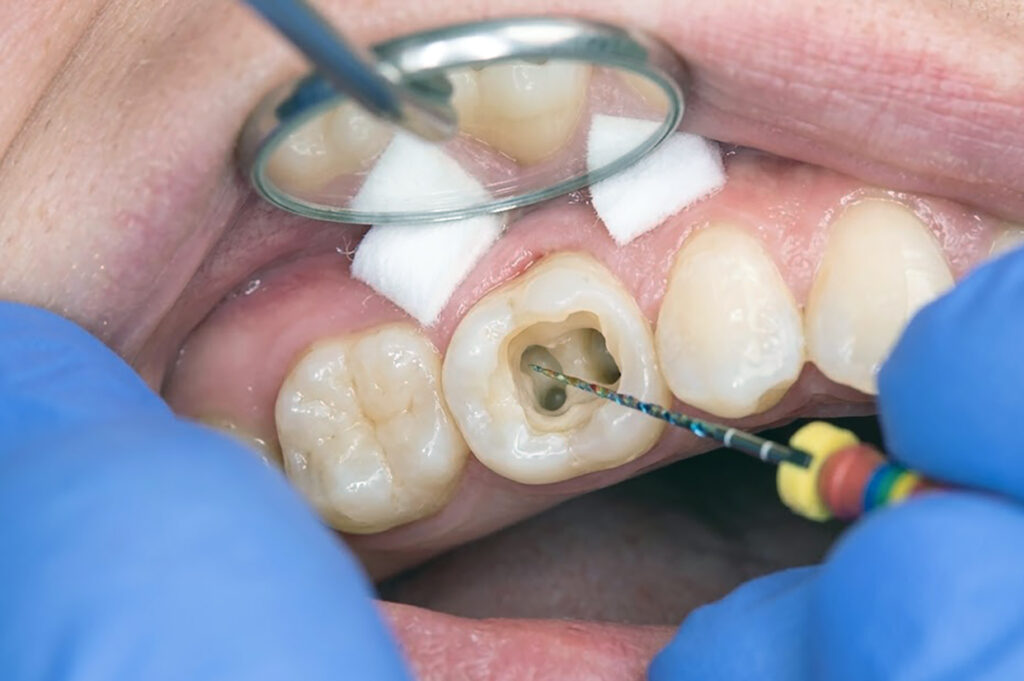
Root canal treatment is usually recommended when the soft tissue inside the tooth, known as the tooth pulp, which contains nerves, blood vessels, and connective tissue, has been damaged by tooth decay, deep cavities, trauma, a crack, or a severe bacterial infection. The root canal procedure involves removing the infected dental pulp and tissue from the root canal system. To do so, the dentist opens the affected tooth, removes the infected pulp, cleans and disinfects the root canals to eliminate infection, and seals the space to reduce the risk of bacteria reentering. A temporary or permanent restoration, such as a crown, is then placed so the natural tooth can function again.
Many worry that root canal treatment itself will be painful. In truth, the treated area is numbed with local anaesthesia, so that the dental procedure is comfortable. What most patients notice afterwards is their improved oral health.
Why Do Teeth Need Root Canal Treatment?
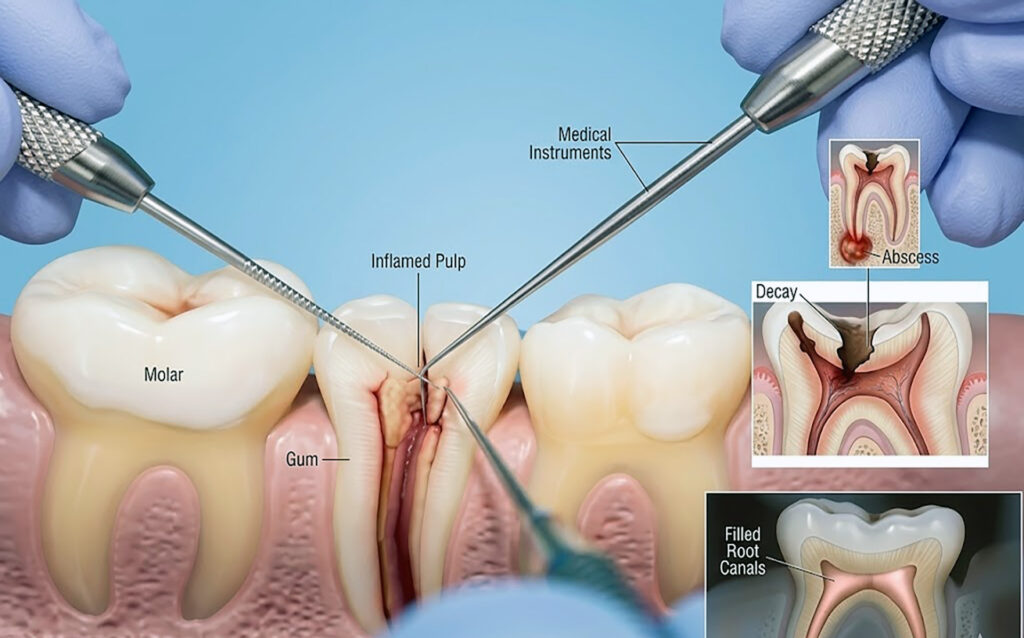
Root canal therapy is the most suitable treatment for avoiding tooth extraction. Teeth need root canal treatment when infection or inflammation reaches the infected pulp and the natural tooth cannot recover on its own.
You may need a root canal procedure if you have lingering tooth sensitivity to hot or cold temperatures, repeated throbbing tooth pain, sharp pain, swelling around the surrounding gum tissue, pain when chewing, deep cavities, or an infected tooth that has darkened after injury. These are all signs of infection in your tooth. Not every painful tooth needs root canal therapy, but these are common warning signs that the nerve inside the tooth’s root may be involved.
A proper root canal dental consultation matters because symptoms can overlap with issues such as tooth cracks, gum disease, bite problems, or pain from the surrounding teeth. Your dentist will usually assess the affected tooth clinically and with X-rays before deciding whether root canal treatment is the right option for your teeth.

What Are Root Canal Treatment Side Effects?
Most side effects of root canal treatment are mild, temporary and part of normal healing rather than a sign that root canal treatment has failed.
The most common after-effects of root canal treatment are soreness after the anaesthetic wears off, tenderness when biting on the treated tooth, mild swelling in the surrounding gum, slight pain, and short-term tooth sensitivity. This is because cleaning the root canals can briefly irritate the treated area further before it settles.
The side effects of root canal treatment are usually manageable over time, with sensible aftercare and the medicines your dentist recommends. Most patients improve steadily over the first few days. To ensure proper healing, maintain good oral hygiene and follow your dentist’s instructions.
Short-Term Side Effects After Root Canal Treatment
Once the numbness from local anaesthesia fades, it is common to feel some aching or pressure around the treated tooth. Chewing may feel uncomfortable for a few days, especially if the treated tooth was very inflamed before the root canal procedure. Mild bleeding from the gum margin or slight puffiness can also happen, particularly if the area was infected to begin with.
Temporary numbness in the lip, tongue or cheek can occur for a few hours after root canal treatment due to the anaesthetic. This should gradually wear off during the same day. Some patients also notice that the tooth feels slightly ‘different’ when they bite. Often, this is simply part of the settling process, but if the bite feels too high or the tooth strikes before the others, the filling may need a small adjustment. Speak to your dentist if this is the case.
Swelling often starts to ease within a couple of days. Simple measures such as following your dentist’s instructions, using pain relief as advised, keeping your head slightly elevated when resting, and avoiding heavy chewing on the treated side can make recovery smoother.

Long-Term Side Effects and Less Common Complications
Long-term effects of root canal treatment are less common but may include tooth fracture, reinfection, persistent root canal pain, gum inflammation, further complications, or abscess formation. Each of these warrants further check-ups.
There are other important considerations. For example, root canal-treated teeth can become more brittle. That is not because root canal therapy is harmful, but because the treated tooth often had extensive tooth decay, old fillings, or loss of tooth structure.
If a large amount of tooth structure has been removed, the affected tooth may be more likely to crack under chewing pressure. That is why placement of a dental crown is often recommended, especially for the back teeth. A dental crown protects the restored tooth and the surrounding teeth.
Persistent pain is another issue that deserves attention. Some tenderness is expected, but persistent discomfort that recurs after an initial improvement or interferes with daily life may indicate further complications such as reinfection, unresolved inflammation, a missed canal, or a bite that needs correction.
Gum inflammation around the treated area can also occur, and in some cases, a dental abscess may develop if bacteria remain or re-enter the treated area, affecting the surrounding bone. Contact your dentist promptly if you suspect reinfection, as early treatment can eliminate the infection and prevent further complications.
A treated tooth can also darken over time. Tooth discolouration is a recognised but uncommon aesthetic side effect of root canal therapy, linked to changes inside the tooth after the pulp has been removed. If tooth discolouration happens, a root canal specialist can discuss cosmetic options such as internal whitening, a dental crown, or a veneer, where appropriate.
Rare Risks Patients Should Know About
Rare root canal risks include an allergic reaction to dental materials, irritation of the surrounding tissues, temporary nerve damage or nerve-related numbness, severe pain, and sinus problems.
These are rare but serious enough to warrant knowing about. An allergic reaction may occur in a small number of people who are sensitive to anaesthetics, medications, or dental materials. Surrounding tissues can also be irritated during the root canal procedure, although this is unusual in experienced hands. In a very small percentage of cases, numbness related to surrounding nerves may persist longer than expected, though it should improve with appropriate treatment.
For upper molars that sit close to the sinus, some patients may notice sinus pressure, congestion, headache, or an unusual salty taste if the area becomes irritated. This is usually temporary, but ongoing sinus symptoms after dental treatment should be reviewed rather than ignored for a careful recovery.
When to See a Dentist
Call your dentist promptly if you develop increasing swelling, severe throbbing tooth pain, pus, fever, a bad taste, worsening difficulty chewing, or a discomfort that does not start to improve within a few days of the treatment. You should also seek review if the numbness does not wear off, the tooth feels loose, or the temporary filling breaks down.
A review is also sensible if the tooth still hurts long after the initial healing phase. Sometimes the problem is not an infection at all, but is actually a bite issue, a tooth fracture, or the need for a dental crown.
How Dentists Diagnose the Cause of Ongoing Symptoms
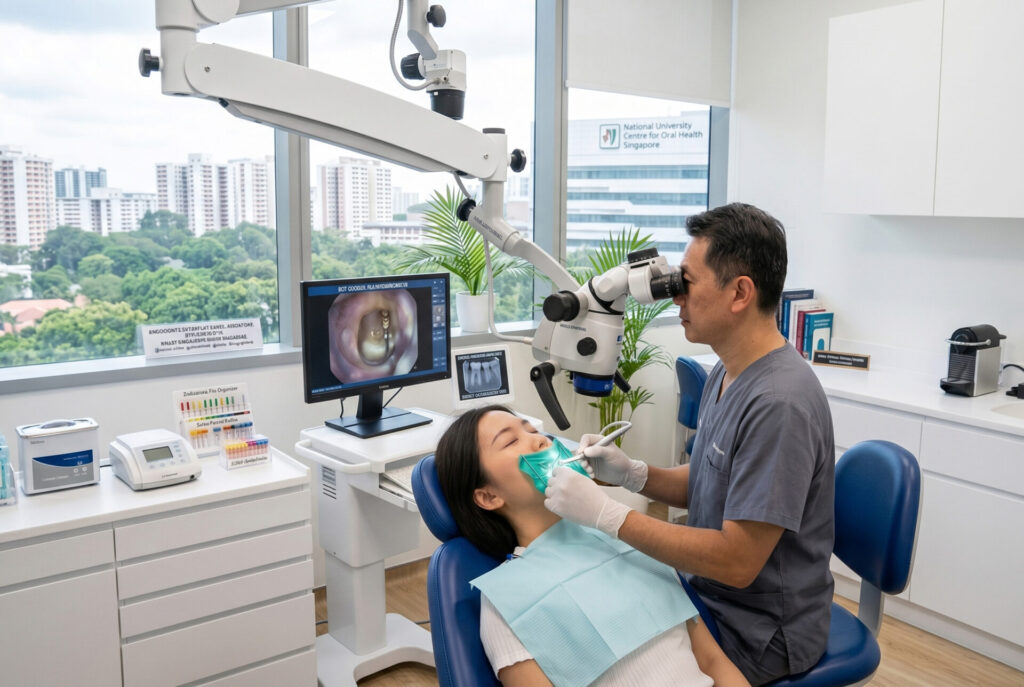
Dentists diagnose ongoing symptoms after root canal treatments by examining the tooth, bite, and gum tissues and taking updated X-rays when needed.
If you come back with pain or swelling, the dentist will usually ask when the symptoms started, whether they are improving or worsening, and what triggers them. They may tap the tooth, test the surrounding gums, investigate whether the temporary or permanent restoration is intact, and assess whether the bite is placing excessive pressure on the treated tooth. X-rays help show whether healing is occurring at the root tip or if there are signs of persistent infection.
This step matters because the right treatment depends on the cause. A high bite needs something different from a cracked tooth, and reinfection requires different treatment from the regular post-root canal tenderness.
Treatment and Recovery
For routine post-treatment soreness, dentists usually recommend rest, avoiding hard or sticky foods, and using medication as advised. Maintaining excellent oral hygiene to keep plaque levels down will protect oral health and not disturb your recovery. Regular dental check-ups also help monitor the treated tooth.
If symptoms indicate a complication, treatment may include adjusting the bite, replacing a leaking filling, placing a dental crown, prescribing appropriate medication, draining an abscess, or considering re-treatment if the root canal system needs to be cleaned and sealed again. Ongoing dental care, dental health, and oral health follow-up are integral to a successful root canal recovery, and are not optional extras.
How TEETH @ Tiong Bahru Can Help
TEETH @ Tiong Bahru can help by distinguishing normal healing from a true complication and treating the tooth before a small problem becomes a bigger one. At TEETH @ Tiong Bahru, we carefully assess the tooth during a root canal consultation, explain what to expect, and review signs that require intervention. This includes checking the seal, planning the appropriate final restoration and root canal crown placement, monitoring the effects of root canal treatment on healing, and helping most patients protect the natural tooth long-term with sensible aftercare, good oral hygiene, and regular dental check-ups.
Root canal-treated teeth do best when managed properly. Most side effects settle, and the tooth can continue to serve you well for years. Book an appointment with TEETH @ Tiong Bahru today.