
If your tooth is structurally damaged, there are usually two options: root canal treatment or extraction. These two methods serve very different purposes, and it’s important to understand the difference. Root canals save the natural tooth structure by clearing infection, preserving function and are generally better for long-term oral health, despite their higher initial cost.
Tooth extractions cost less upfront but require future expenses for a replacement tooth (dental implants/dental bridges) due to bone loss and tooth movement. Tooth extraction is only necessary for a severely damaged tooth. In every case, the best choice depends on the tooth’s health, cost, and overall dental health, and requires a consultation with a dental professional.
At TEETH @ Tiong Bahru, we frequently see patients who require either option. We use exams and dental X-rays to determine if the affected tooth can be saved and strengthened. Your long-term oral health is our priority, regardless of the method you choose.

Decision between Root Canal vs Extraction
The decision between root canal treatment vs tooth extraction is essentially whether to keep your natural tooth or remove it. Several factors come into play, including tooth health, the cost of each method, and your dental priorities.
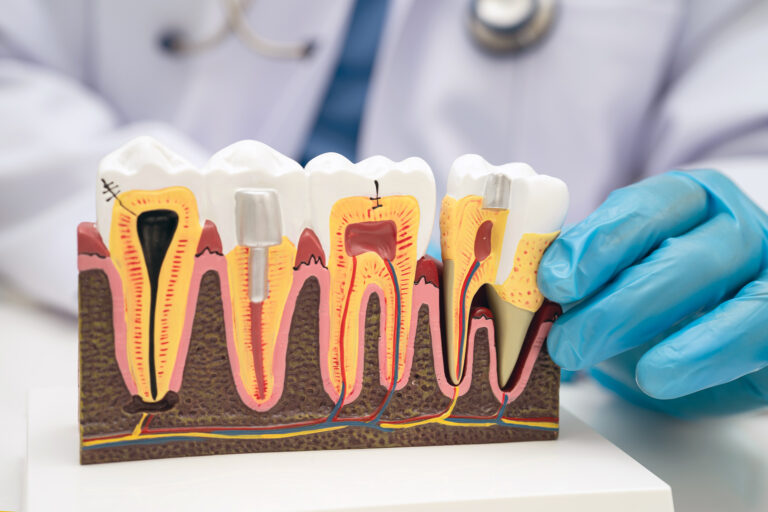
- Root canal treatment saves the tooth by cleaning, disinfecting, and sealing the infected pulp chamber, allowing the tooth to remain functional.
- Tooth extraction involves removing the entire tooth. While necessary if the tooth can’t be saved, a missing tooth can cause surrounding teeth to shift, bite problems, and bone loss if not replaced with a suitable dental implant.
| Method | Root canal treatment | Tooth extraction |
| Main goal | Save the tooth | Remove the tooth |
| Often followed by | Permanent filling or dental crown | Dental implant, dental bridge, or denture planning |
| Recovery focus | Settling inflammation, protecting the restoration | Protecting the clot, healing the socket |
| Long-term impact | Keeps the tooth in place | A gap can change bite if unmanaged |
What a Root Canal Treats
Inside each tooth is a soft centre called the tooth pulp, which contains nerves and blood vessels. When bacteria reach the pulp, usually through tooth decay, cracks, or trauma, the pulp tissue becomes inflamed or infected. Pressure builds, which is why the tooth pain can feel intense.
Root canal therapy removes the infected pulp, cleans the inside of the tooth, and seals it so that bacteria cannot re-enter. The aim is simple for root canal specialists: stop further infection and keep the tooth.
Antibiotics can be useful in certain dental treatments, but they do not cure an infected tooth from the inside. If pain or a severe toothache persists, or if the tooth continues to swell, the underlying cause must be treated, not just the symptoms.
Tooth Extraction vs Root Canal for Saving the Tooth
If the tooth can be restored, saving it often protects your bite with the least knock-on effects. When enough healthy tooth structure remains to rebuild, and the surrounding gum support is stable, specialists usually favour choosing root canal treatment.
This often matters most for chewing teeth. A decision between root canal vs extraction for your second molar goes beyond aesthetics. Second molars take a heavy load, so losing that critical tooth can change how you chew, sometimes leading to overuse on other teeth.
It is also worth noting that saving a tooth extends beyond the present. When a tooth can be predictably restored, keeping it is often the simplest way to preserve your natural smile and avoid a longer treatment timeline. Proper oral hygiene also helps maintain the treated tooth.

When Extraction Is the Better Option
There are times when complete removal is more predictable, more comfortable in the long term, and less likely to turn into repeated repairs.
Tooth extraction may be recommended when a tooth is broken below the gumline, split down the middle, or too severely decayed to support a dental root canal implant. It may also be the better route if there is gum disease (also known as periodontal disease), support loss, or if a previous root canal has failed and retreatment is unlikely to succeed.
There are a few real-world scenarios where tooth extraction is the better option. Some patients need a tooth removed as part of orthodontic treatment for crowding. Others have advanced gum disease, where the tooth no longer has stable bone support. In these cases, saving the problematic tooth may not be realistic or fair to the patient long term and could lead to further complications.
Cracks deserve special mention. For a cracked tooth with a root canal, extraction is determined by the crack pattern. Some cracks can be stabilised. Others act like a seam that keeps letting bacteria in, even after a dental procedure. That is where tooth extraction can be the kinder option to prevent tooth damage.

Root Canal vs Extraction Pain
Pain is the primary concern for most patients visiting the dentist, but modern techniques have changed the experience.
A root canal procedure is typically performed under local anaesthesia and should feel similar to a tooth-filling appointment. You may notice pressure and vibration, but not severe root canal pain.
Tooth extraction is usually comfortable because the area is numbed. The difference is often afterwards. Swelling, tender gums, or soreness may be more noticeable after a tooth extraction, and there is a risk of dry socket, especially with more difficult removals.
One point many patients find surprising is that tooth extraction is not always the easier route. Removing a tooth is a more physically demanding procedure than cleaning and sealing the inside of a tooth. That does not mean you should fear tooth extraction. It simply means that pain alone should not be the deciding factor when comparing tooth extraction and root canal treatment.
Root Canal vs Extraction Pros and Cons
The primary advantage of root canal therapy is that it preserves your tooth. This means you retain your natural tooth’s chewing function, reduce the risk of neighbouring teeth drifting, and often avoid more complex tooth replacement options. The downside is that it is a step-by-step endodontic process. Many teeth, especially molars, need a dental crown after root canal treatment to reduce the risk of future fracture.
Tooth extraction, on the other hand, can be quick and definitive. The trade-off is the gap left by the missing tooth. If you plan to replace the tooth, you may be considering a dental implant, a dental bridge, or a denture, each with its own costs, timelines, and maintenance requirements.

What Happens after an Extraction
When you extract a tooth, the socket heals, but the jawbone in that area can slowly shrink over time. That shrinkage is one reason adjacent teeth may drift and why the bite can change.
If you plan to replace the tooth with a dental implant, you may also need extra steps first. Some patients require bone grafting to rebuild or preserve the ridge. For certain upper back teeth, the sinus sits close to the tooth root, and a sinus lift may be needed before dental implant placement. Not everyone needs these additional dental procedures, but they can affect both timeline and overall cost. That is why the best comparisons of root canal vs extraction cost look at the full pathway, not just the first appointment.
Root Canal vs Extraction Cost in Singapore
A root canal versus the cost for an extraction in Singapore at TEETH @ Tiong Bahru is:
| Procedure | Cost |
| Tooth Extraction Treatment | Non-surgical extraction ranges from $98.10 to $185.30 Surgical extraction ranges from $783.00 to $1,528.00 per tooth. |
| Root Canal Treatment | Incisors, canines and premolars, the fee typically ranges from $491.00 to $872.00. Molars, which have more complex anatomy, can cost between $927.00 to $1,199.00. |
Upfront, tooth extraction is often less expensive than root canal therapy, especially when a dental crown is included. However, if an extracted tooth is later replaced with a dental implant or dental bridge, the total cost, potentially including bone grafting, can exceed the cost of saving the tooth.
In Singapore, root canal fees vary by tooth, the number of canals, the complexity of the infection, and whether it’s a first treatment or a retreatment. The most useful cost is the final number after an assessment that includes the full restoration plan, not a generic number you find online.
How Many Visits Should You Expect For Root Canal Treatment vs Tooth Extraction?
A simple root canal procedure on a front tooth may be completed in one visit, while molars often require two appointments. If the infection is severe, a medicated dressing and a temporary filling may be placed first using a biocompatible material; the tooth is then sealed and restored at the next visit.
Tooth extractions can be straightforward for visible, accessible teeth, but surgical extractions can take longer and involve a longer healing process. The real timeline also depends on the full dental plan. Replacing a tooth with a dental bridge may be faster than a dental implant, which requires healing time for the bone to integrate.
What To Expect at TEETH @ Tiong Bahru
At TEETH @ Tiong Bahru, our dental professional begins by closely examining the affected tooth, checking the surrounding gums, and assessing how your teeth bite together. We also look at dental X-rays to assess the condition of the tooth’s root and the bone supporting the tooth, and to detect any cracks or infections at the root tip.
The method we choose depends on the results of our assessment of your suitability for either procedure.
- If root canal therapy is the right choice, we will explain the endodontic procedure, how many visits it will require, and why we typically recommend a dental root canal crown afterwards to protect the tooth from further decay.
- If extraction is the better option, we will discuss the healing process, how to manage mild discomfort with over-the-counter pain relievers, and whether you need to replace the tooth.
If you are nervous about visiting the dentist, please let our team know in advance. It’s important to talk openly and take our time so you feel in control during your dental treatment and understand all treatment options.

Aftercare Basics that Protect Your Outcome
After root canal therapy, mild discomfort is common for a day or two, especially if the tooth was sore to bite on beforehand. Keep the area clean with proper oral hygiene and avoid chewing on that tooth until the final restoration is placed. If a temporary filling has been placed, avoid eating sticky or very hard foods on that side to reduce the risk of dislodging it. Attend your follow-up appointments to ensure the tooth is properly protected with the appropriate restoration and maintain oral health.
After tooth extraction, you will usually bite on gauze to promote clot formation. Use ice packs intermittently on the outside of the face on the first day if advised. Stick to soft foods and avoid straws, as suction can dislodge the clot. Avoid vigorous rinsing for the first 24 hours, then follow any of your dentist’s post-extraction care instructions for gentle cleaning. If pain suddenly worsens within a few days, contact the clinic promptly, as this may indicate dry socket and may require treatment.
How TEETH @ Tiong Bahru Can Help
Root canal treatment or tooth extraction is ultimately about choosing the treatment option that gives you the best chance of a comfortable, stable mouth for years to come. If the tooth can be saved and restored, root canal treatment often preserves function with fewer adverse effects. If the tooth is beyond repair due to extensive decay or swollen or tender gums, tooth extraction may be the best option, especially when paired with a sensible plan for the gap.
If you are considering root canal treatment versus extraction, our team at TEETH @ Tiong Bahru can help. Book a consultation, and we will walk you through your treatment options, provide practical advice, and build a plan that fits your oral health and schedule.