
What Is a Root Canal in the Front Tooth?
A root canal treatment for a front tooth removes infected or inflamed pulp from an upper or lower front tooth, allowing the tooth to be kept, sealed, and restored.
A front tooth can need root canal treatment for the same broad reasons as any other tooth, but trauma is especially important here, as these teeth are more likely to be impacted due to a fall. Similarly, a crack or a deep decay can damage the tooth’s pulp and blood vessels, leading to pulp inflammation, tooth pain, or a gradual darkening of the tooth.
Our front teeth usually have one root and a simpler canal anatomy than molar teeth. Treatment is often more straightforward, though the appearance will matter more post root canal because the tooth is more visible than a molar or your other teeth. If left untreated, an infected tooth can lead to more serious oral health problems, including the spread of infection to adjacent teeth or soft tissues.
Symptoms
Symptoms of a front tooth needing root canal treatment include pain, prolonged sensitivity, colour change, swelling, or tenderness when biting.
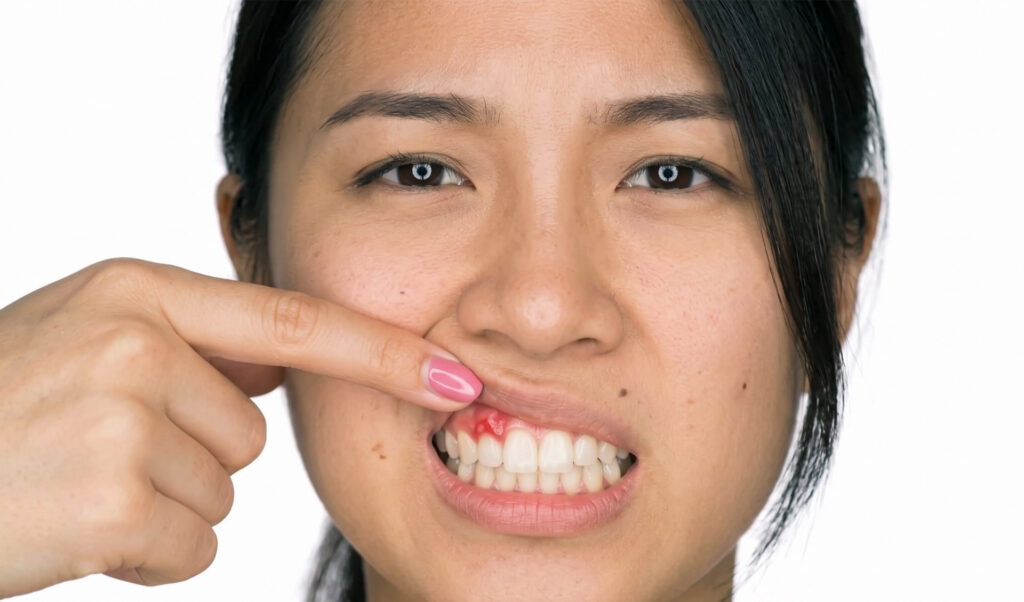
Some people experience a severe toothache – a sharp, throbbing tooth pain. Others notice lingering sensitivity to hot or cold temperatures, gum swelling, a small pimple on the gum, or discomfort when biting into food, particularly with the front teeth. A front tooth may also become darker after trauma, even before treatment, which can indicate that the tooth pulp and blood supply have been damaged.
In some cases, there are surprisingly few symptoms until an X-ray taken for a different reason by your dentist shows infection at the root tip. Experiencing tooth pain that does not settle or persistent tooth pain after a dental injury is a reason to seek a dental review promptly.
When to See a Dentist
You should see a root canal specialist promptly if a front tooth becomes painful, discoloured, chipped, or tender after trauma.
If you have persistent root canal pain, swelling, a darkening tooth, or a chipped tooth after an accident, see your dentist immediately. A tooth that looks intact can still have infected pulp tissue inside. If left untreated, the infection can spread to the pulp chamber and surrounding structures, leading to further oral health problems.
For patients, that usually means not waiting to ‘see if the pain settles’ after a knock or sports injury.
Diagnosis
Diagnosis for a root canal begins with an examination and dental imaging to confirm whether the pulp is inflamed, infected, or already non-vital.
Your dentist will ask about tooth pain, trauma, colour change, and when the problem started. They will examine the affected tooth, the surrounding gum, and the bite. A root canal X-ray of the front tooth will help show the root’s shape, the presence of infected pulp tissue at the tip, and any unusual features that could affect treatment.
In more complex or trauma-related cases, three-dimensional Cone Beam Computed Tomography (CBCT) imaging may also be useful, as it can reveal root canal system anatomy or infection that a standard two-dimensional X-ray may miss.
Non-Surgical Management
Non-surgical management is the main treatment for most infected front teeth and aims to remove the infection while preserving the natural tooth.
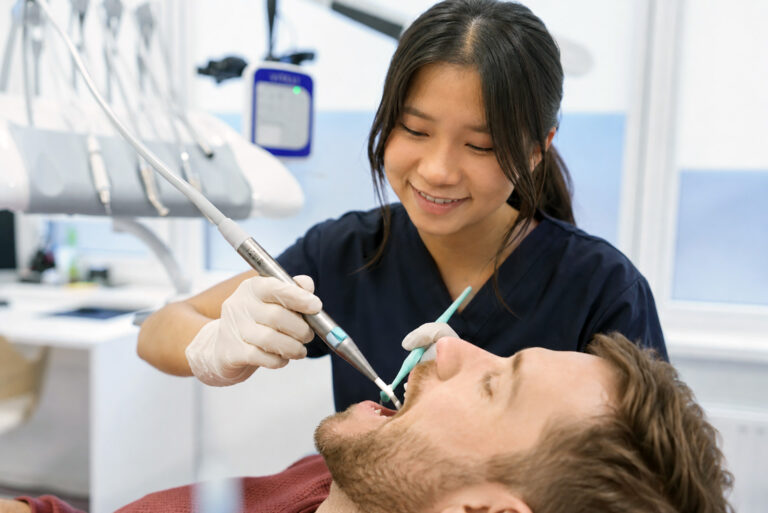
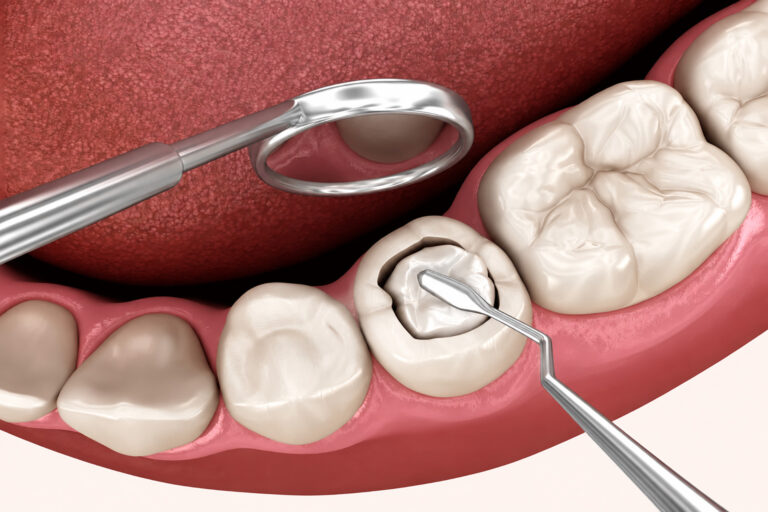
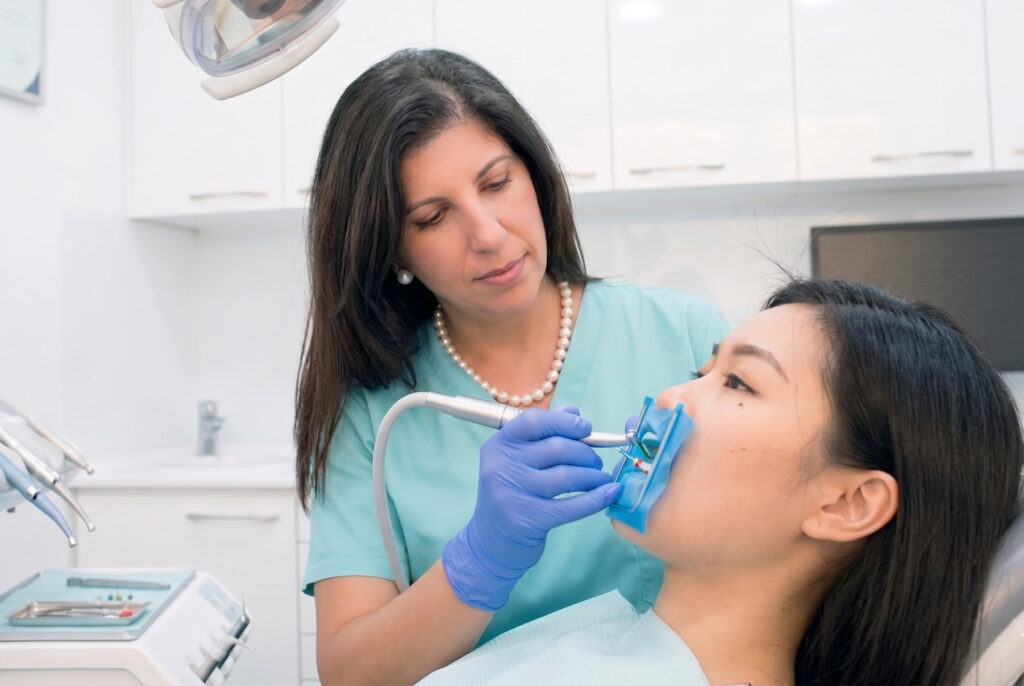
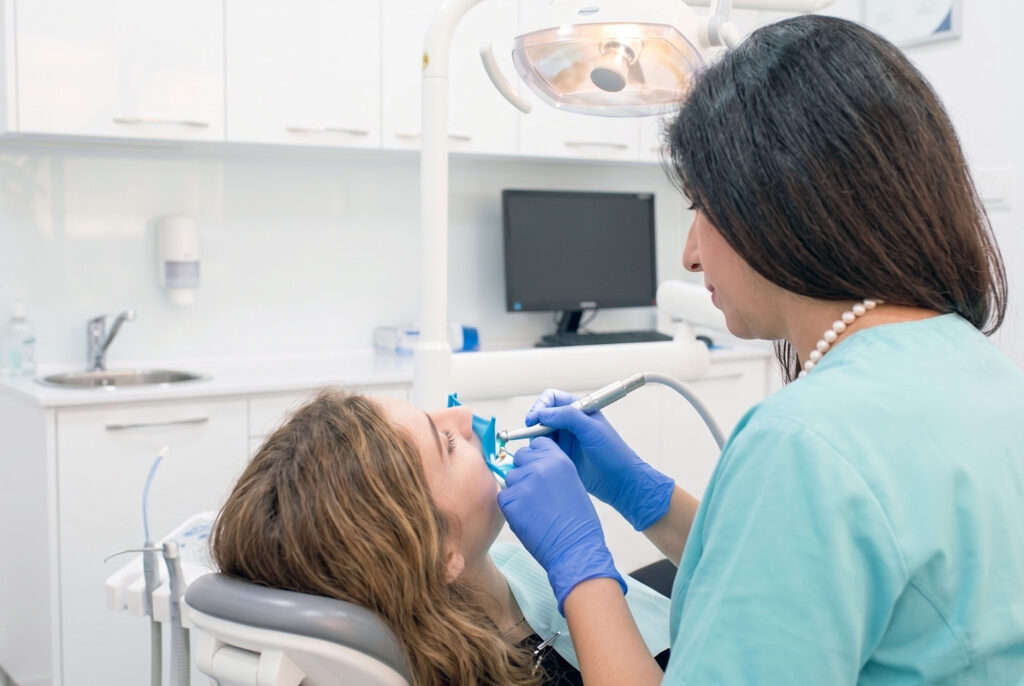
The root canal procedure for front teeth starts with local anaesthesia and the isolation of the tooth with a dental dam. The dentist makes a small opening, often from the back of the tooth, removes the infected or damaged pulp from the pulp chamber, cleans and disinfects the root canal system, and seals it.
A composite white filling material is then used to restore the access opening. As the opening is usually on the inside surface, a front tooth may sometimes be restored without full coverage if the remaining natural tooth structure is sound. Most patients find the dental procedure manageable with adequate local anaesthesia, and modern techniques aim to keep the experience as pain-free as possible.
Treatment for front teeth root canals is often quicker than for molar teeth because front teeth tend to have fewer and straighter canals. Some cases can be completed in one visit, while others need more than one appointment if the infected pulp tissue is more extensive or the tooth has been complicated by trauma. A temporary filling may be placed between appointments while the root canal heals.
Another common question is whether a crown on a front tooth after a root canal is always necessary. If the tooth is structurally stable and the access cavity is small, a bonded composite restoration may be enough to preserve the natural tooth structure. If the tooth was already badly broken, heavily decayed, or at risk of a fracture, a dental crown may be the better long-term restoration to protect the root canal-treated tooth.
Surgical Options
Surgical options are usually reserved for cases in which a front tooth fails to heal after standard root canal treatment or in which infection persists.
If symptoms continue despite a well-planned root canal treatment, your dentist may discuss endodontic retreatment or apical surgery. Endodontic treatment from the tip of the root removes infected tissue and seals the tooth from the end of the root. In some severe cases, tooth extraction may still be necessary, though the goal is usually to preserve the natural tooth where possible. If tooth extraction is needed, dental implants are a common option for restoring oral health and protecting the adjacent teeth.
How Much Does a Root Canal on a Front Tooth Cost?
The cost of a root canal on a front tooth depends mainly on which tooth is being treated, how complex the canal anatomy is, and whether the tooth needs further restoration afterwards.
Root canal treatment for incisors, canines and premolars typically ranges from $491 to $872. This means the cost of a front tooth root canal will usually fall within that range, depending on the specific tooth and the complexity of treatment.
If the tooth needs extra reinforcement or aesthetic restoration afterwards, that will add to the total cost. At TEETH @ Tiong Bahru, the price of a dental crown ranges from $1,199 to $1,889.50, depending on the material used.
For eligible patients, dental insurance plans and subsidies may help reduce any out-of-pocket costs. CHAS, Merdeka Generation, and Pioneer Generation subsidies for Singaporeans may apply. From mid-2026, eligible seniors aged 60 and above may also use Flexi-MediSave of up to $400 per year for root canal treatments and permanent crowns at CHAS dental clinics and public healthcare institutions. Exact subsidy amounts depend on the card type and the tooth being treated.
Risks and Recovery
Recovery after a front tooth root canal is usually short, but the root canal-treated tooth still needs protection, review, and sometimes cosmetic refinement.
Most patients have a mild discomfort for a few days rather than a severe pain. The treated tooth and surrounding tissues may feel tender, especially when biting, but this should improve over time. Pain medication can help manage any mild discomfort during this period. Follow your dentist’s instructions carefully and maintain good oral hygiene to support healing. If persistent pain persists beyond about a week, worsens, or is accompanied by swelling or discharge, the affected tooth needs review.
A front tooth can also change colour after treatment. This matters more aesthetically than it does in the back teeth, so dentists may discuss internal bleaching, bonding, or other restorative options. Some patients ask about a veneer on a front tooth after a root canal. In other cases, a dental crown or internal bleaching may be the better choice. Regular dental check-ups after treatment help monitor the root canal-treated tooth and maintain long-term oral health.
A cracked front tooth after a root canal or a restoration that feels unstable needs attention. Likewise, a loose front tooth after a root canal is not something to ignore, especially if trauma, bone loss, or reinfection may be involved. Even when treatment is technically successful, complications such as a loose permanent filling or crown, a fractured restored tooth, or reinfection can occur if the tooth is not properly restored and monitored.
How TEETH @ Tiong Bahru Can Help
TEETH @ Tiong Bahru can help by diagnosing the cause of front tooth pain or a discolouration, carefully planning treatment, and protecting both the tooth’s appearance and its function.
Root canals on front teeth require a slightly different balance from molar teeth. Infected tissue must still be removed thoroughly from the root canal system, but the final result must also look natural in the smile line. This means fully assessing the affected tooth, using the right imaging where needed, and deciding whether the best restoration is a bonded filling, a dental crown, or a more cosmetic finish after the procedure.
Just as importantly, long-term oral health depends on what happens after the root canal. Good oral hygiene, regular dental check-ups, and protection from further trauma all matter. With timely care and proper restoration, a root-canaled front tooth can often remain functional and natural-looking for many years. If you have a problem with your front tooth, call TEETH @ Tiong Bahru today and make your appointment.