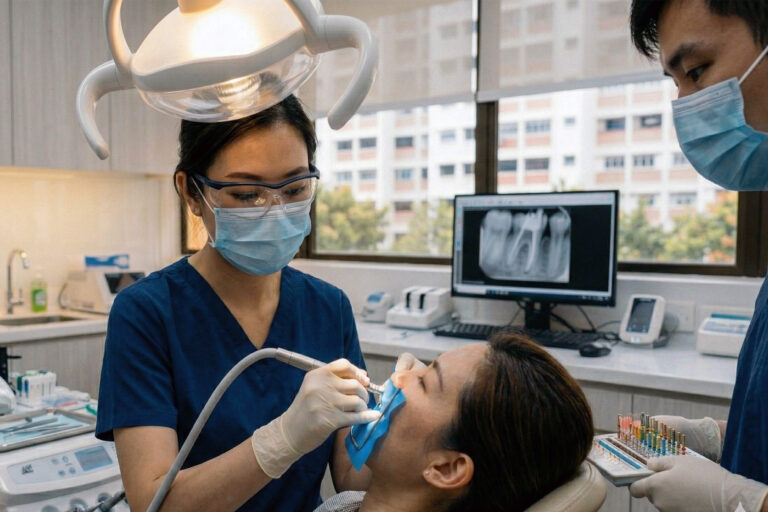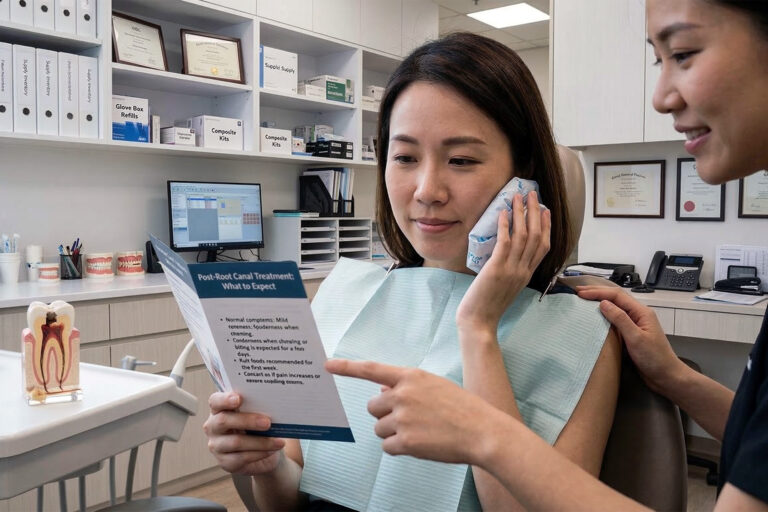
After a root canal treatment, most can return to normal life quickly, but the treated tooth needs time and protection to heal properly. At TEETH @ Tiong Bahru, we often see many patients who feel immediate relief, then worry when the tooth becomes tender later that same day. That reaction is usually normal. The key is knowing the difference between expected healing and serious signs that need a review.
What Is the Care After Root Canal Treatment?
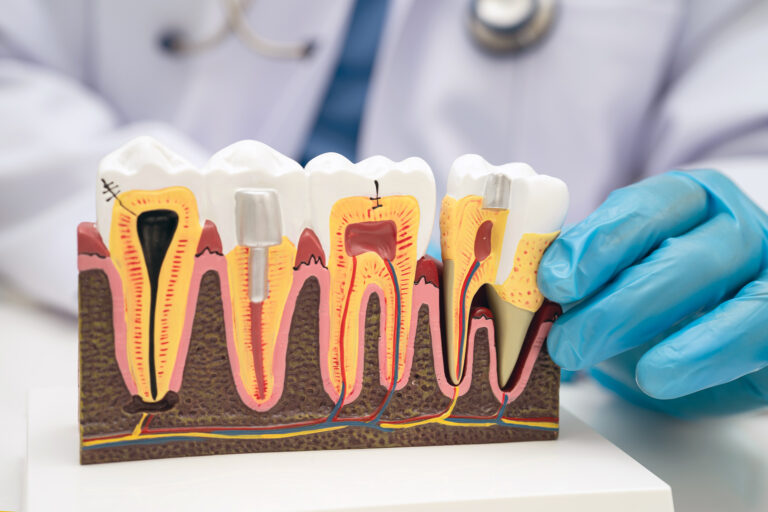
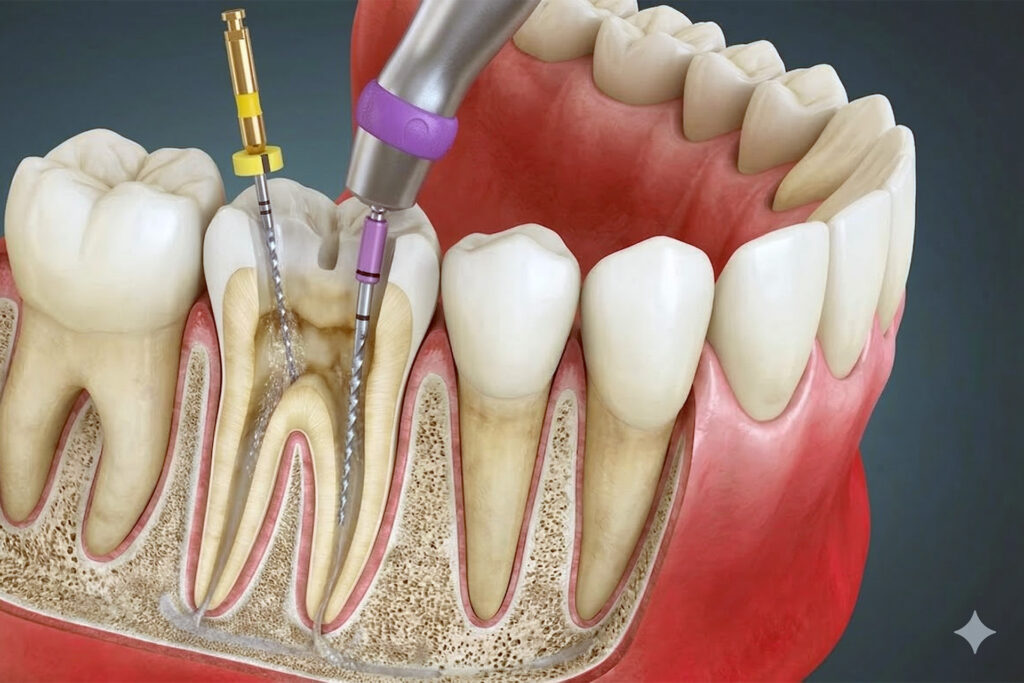
A root canal procedure is a dental procedure in which a dental professional removes the infected pulp, containing nerves and blood vessels, from the tooth’s pulp chamber and root canal system, cleans the canals, and seals them. After root canal treatment, post-treatment care helps the treated tooth heal, reduces inflammation, and protects it from fracture or reinfection.
Think of it as two parts. Root canal therapy is a routine procedure that removes infected pulp from the root canal. The aftercare and post-treatment care protect the tooth long-term.
Normal Symptoms
What you feel after a root canal procedure is usually linked to inflammation around the root and the bite settling. Mild soreness and root canal tooth pain are common symptoms, especially when chewing or tapping on the treated tooth. Some patients notice a dull ache for a few days; others feel brief tooth sensitivity when biting.
It is also normal to feel different on that side of your mouth because the treated area is numbed with local anaesthesia. As the local anaesthesia wears off, you may notice mild jaw muscle soreness that should settle over time. If you have a temporary filling, the tooth may feel slightly rough or higher until the bite is adjusted or the crown is placed. Lingering sensitivity to hot or cold temperatures is usually temporary as well.
What to expect after root canal treatment in the first week
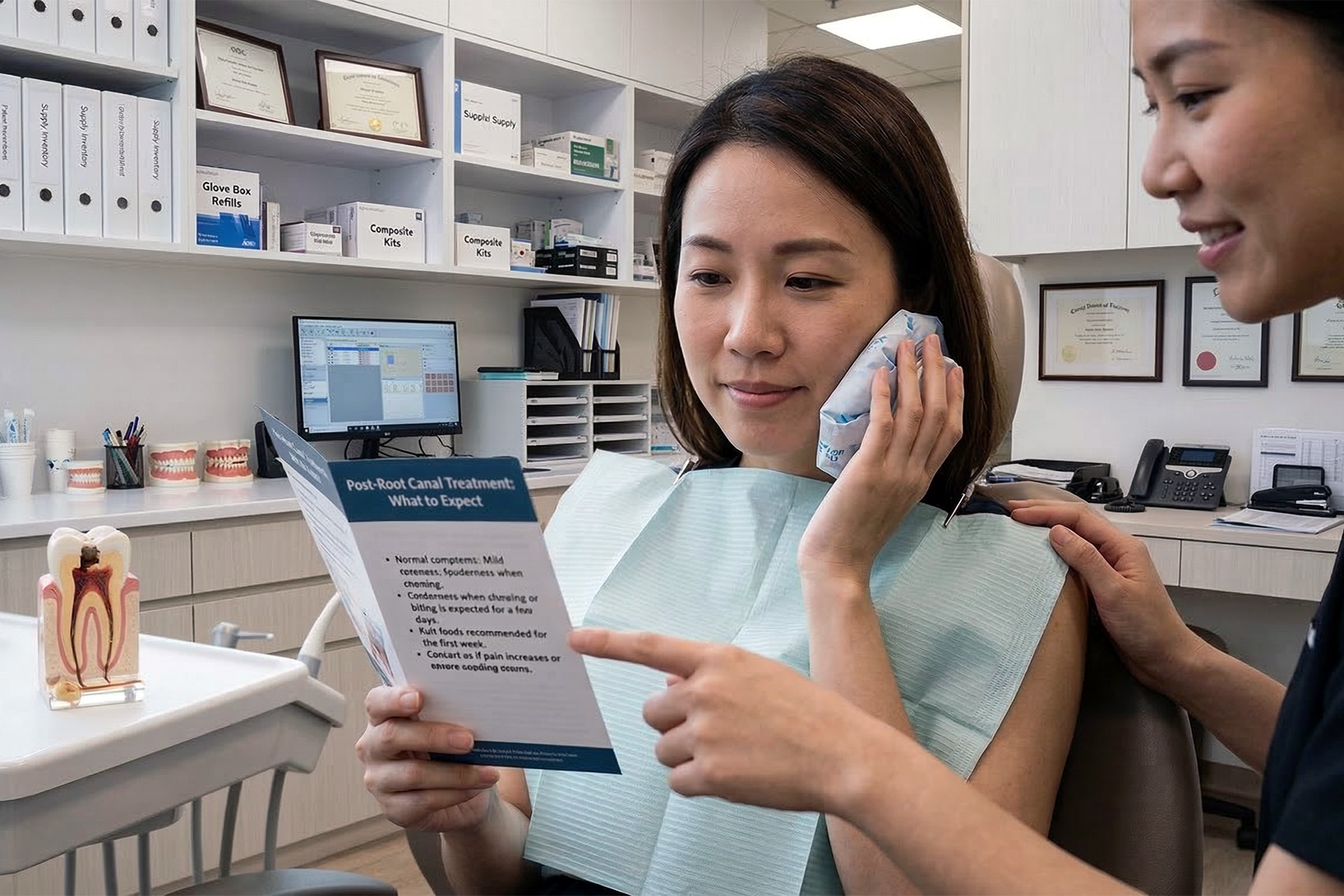
On Day One, numbness can last for a few hours. Once it fades, a mild pain is common. For most, discomfort may peak within the first 24 to 48 hours, then steadily improve. By days 3 to 7, the tooth should feel more comfortable, though it may still be slightly tender if you press on it or chew hard foods. Eat soft foods during the first week. Proper healing typically takes a few weeks, so stay vigilant during that time and take care of your tooth. If pain persists without improvement or worsens after a few days, contact a dental professional.
Bleeding gums after a root canal
After root canal treatment, the gums may bleed slightly, but this should be mild and short-lived. Slight bleeding may occur if the instruments irritated the gum during the procedure, or if there was gum inflammation beforehand. Heavy or ongoing bleeding accompanied by swelling requires follow-up assessment by a dental professional.
Face swelling after root canal treatment
Mild puffiness can happen if there was a significant tooth infection before the procedure. However, new or increasing swelling after the dental procedure is a warning sign. It can indicate a persistent infection, a flare-up, or an allergic reaction that needs prompt review. If swelling spreads toward the cheek, jawline, or neck, contact the clinic urgently.
Lump on the gum after root canal treatment
A lump on the gum after root canal treatment can mean different things. Sometimes it is a healing sore spot from the root canal procedure or a pre-existing gum boil that is settling. Other times, it can signal a persistent gum or tooth infection that needs follow-up appointments. If a lump persists, do not ignore it. Contact your dentist promptly.
Common Causes of Pain
Pain after root canal treatment is usually temporary and improves within a day. If the pain is consistent and does not go away, some of the pain after root canal causes include:
- Normal post-treatment inflammation around the tooth’s root
- A bite that is slightly high, causing excessive pressure on the treated tooth
- A pre-existing tooth infection from infected pulp and deep cavities that was severe and needs time to settle
- Pulp inflammation or infection that extended beyond the root canal system before treatment
- Cracks in the treated tooth that become more noticeable once the nerve is removed
- Reinfection due to leakage from a damaged temporary filling or delayed restoration
If the pain is sharp, throbbing, or getting worse, it is not something to wait out. Contact your dentist promptly.
When to See a Dentist Urgently
You should contact your dental professional urgently if you have increasing swelling, fever, difficulty swallowing, or severe pain that does not respond to pain relief. These signs may suggest a spreading infection or further complications that need prompt care. In Singapore, it is common for patients to delay dental reviews until symptoms are severe. This is very unwise, as early review of root canal recovery is safer and often simpler.
Diagnosis
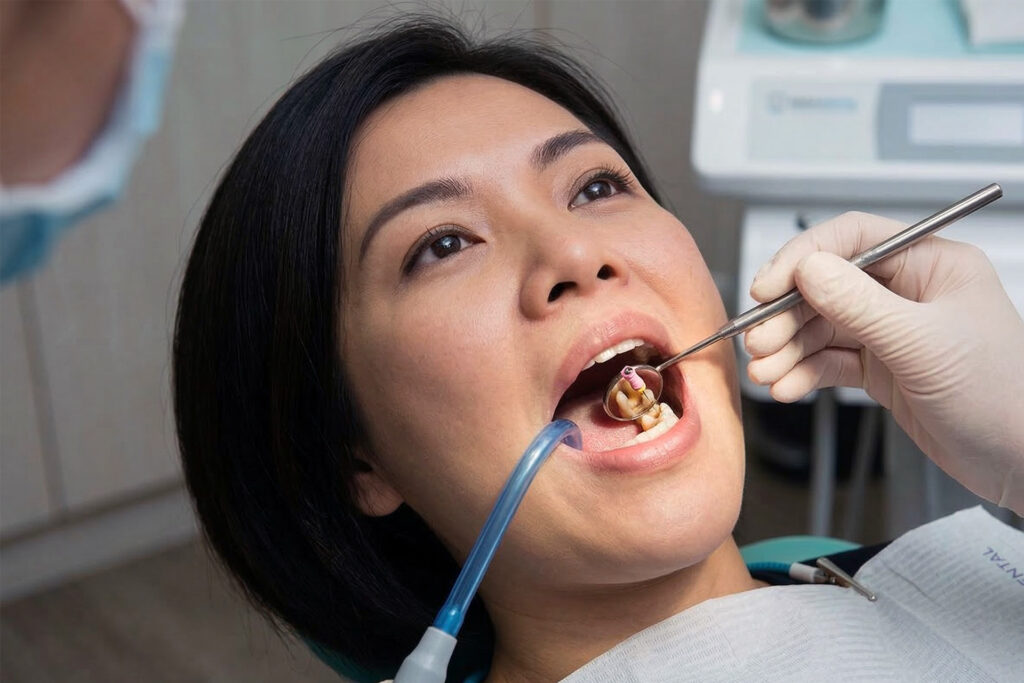
Tooth pain after a root canal is usually caused by inflammation in the tissues around the tooth’s root, a high bite, or residual infection that is still settling. Your dental professional will assess your symptoms, examine the treated tooth, test the bite, and often take an X-ray or perform an electric pulp test if needed. Common reasons include bruising of the periodontal ligament, or a treated tooth biting too high on the opposing tooth, keeping the treated area inflamed.
Do You Need Antibiotics?
Antibiotics are not necessarily required after root canal treatment. The root canal procedure removes the source of infection from the infected pulp inside the tooth. Antibiotics are usually reserved for cases with spreading infection, fever, facial swelling, or compromised immune status.
If your dentist prescribes antibiotics, take them exactly as directed and complete the course.
Do’s and Don’ts After Root Canal Treatment
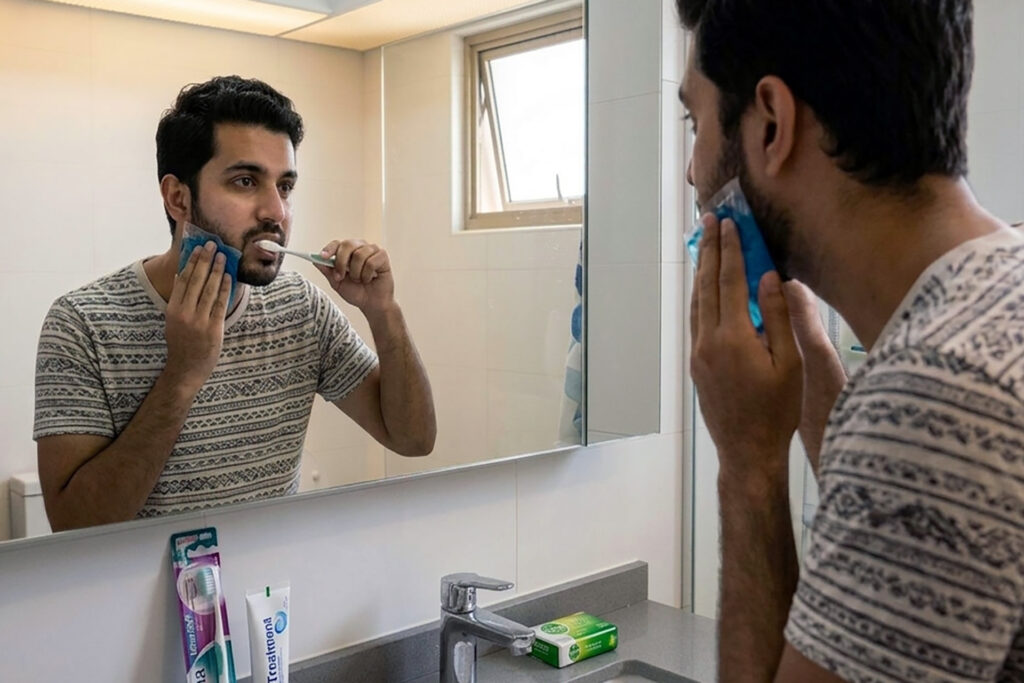
Aftercare after root canal treatment is mostly about protecting the tooth, maintaining good oral hygiene, and avoiding unnecessary strain on the treated area.
| DO’S | DON’TS |
| Do maintain good oral hygiene, keep brushing and flossing as normal, but be gentle around a sore gum area. Do use pain relief as advised. Do chew on the other side of the mouth until the crown placement or the crown is placed, especially if the treated tooth is a molar. | Do not chew hard foods on the treated tooth if it has a temporary filling or if a permanent crown has not yet been placed. Do not pick at the temporary filling. If it feels loose or falls out, contact the clinic. |
If you grind your teeth at night, tell your dentist. Grinding increases the risk of a tooth fracture after a root canal, especially before a root canal dental crown placement on the treated tooth.
What Can I Eat Following a Root Canal?
What you can eat after a root canal depends on numbness and the strength of the tooth. Start with soft foods until the anaesthetic wears off, then stick with soft foods that do not require heavy chewing on the treated side. Yoghurt, scrambled eggs, porridge, noodles, tofu and fish are usually comfortable. If the tooth is sore, ensure the food is lukewarm rather than very hot or icy cold.
What Not to Eat Following a Root Canal
Avoid hard, crunchy and sticky foods that can crack the treated tooth or dislodge the restoration. Nuts, ice, hard crackers and sticky snacks are common culprits. Avoid chewing directly on the treated tooth until you have your permanent crown. Many treated tooth fractures not because the root canal failed, but because the tooth was not protected quickly enough.
Is a Crown Necessary After a Root Canal?
Often, yes, especially for back teeth. Molars and premolars take heavier chewing forces and are more likely to crack after a root canal procedure. A permanent crown covers and protects the treated tooth, reducing the risk of fracture. Front teeth may not always need a crown if there is enough natural tooth structure and the restored tooth is strong.
Complications
Complications after root canal treatment are uncommon, but they can happen. Most patients experience only mild soreness, but complications can cause persistent pain.
Potential issues include persistent infection in infected teeth, persistent pain that worsens after initial improvement, swelling, a high bite, or a restoration that leaks or falls out. A loose tooth or a crack in a tooth can also cause pain that makes it feel like the root canal did not work, even when the canals were cleaned properly.
If something feels off, a review is usually quick and reassuring. A small bite adjustment or restoration repair can make a big difference.
Surgical Options After a Root Canal
Surgical options are uncommon following root canal treatment, but they may be considered if infection persists at the root tip despite appropriate treatment. After imaging, a root canal specialist may recommend an apicoectomy, in which the tip of the tooth’s root and any infected tissue are surgically removed.
Recovery
Root canal recovery is usually smooth when the treated tooth is protected, and follow-up appointments are timely. Many patients feel noticeably better within a few weeks. Tenderness can last longer if the infected tooth had a severe infection.
What helps most is simple: maintain oral hygiene, avoid chewing hard foods that can damage your teeth, manage any prolonged sensitivity, and attend your follow-up appointments for your crown placement. If the tooth is not healing properly, see your dentist.
Regular dental checkups help protect your natural teeth. A permanent filling or crown is part of the same treatment plan, not an optional add-on. Complete post-treatment care to protect your dental health and natural teeth.
How TEETH @ Tiong Bahru Can Help
TEETH @ Tiong Bahru guides you through root canal recovery with clear instructions, careful follow-ups, and a restoration plan that protects your tooth. We assess your bite, monitor proper healing, and advise when a dental crown is needed to prevent reinfection and fracture.
If you have tooth pain, swelling, or concerns following root canal treatment, reach out to our general dentistry clinic. Many post-treatment problems are easier to address early. We help protect your oral health and ensure the proper healing of every tooth following root canal treatment, so call us and make your appointment today.
FAQs About After Root Canal Treatment Care
How long does it hurt after a root canal?
Most discomfort peaks within 24 to 48 hours and improves over a few days. If pain worsens or does not improve, book a review.
Can a root canal get infected?
Reinfection can happen if bacteria re-enter through a leaking filling, a delayed crown, new decay, or complex anatomy. Early review improves outcomes.
What if my gum is bleeding after root canal treatment?
Mild bleeding can happen from gum irritation and should settle quickly. Ongoing bleeding, swelling, or a foul taste should be assessed.
What should I do if I have facial swelling after root canal treatment?
Contact your dentist urgently, especially if the swelling increases or you feel unwell.
What does a lump on the gum mean after treatment?
It may be a draining gum boil or a persistent infection. If it does not resolve within a few days, book a review.
Do I always need antibiotics after root canal treatment?
No, antibiotics are usually reserved for a spreading infection, fever, or significant swelling, and are not routine for root canal treatment.
Can we brush after root canal treatment?
Brush and floss as normal, but gently around sore gums.
What can I eat after root canal treatment?
Soft foods are best until numbness and tenderness settle. Avoid chewing hard foods on the treated tooth until it is fully restored.
What not to eat after root canal treatment?
Avoid hard, sticky, or crunchy foods that can crack the tooth or dislodge a temporary filling.
If you have concerns after root canal treatment, contact TEETH @ Tiong Bahru for a review. Early advice can prevent bigger problems and help protect your tooth long term.