
- Types of braces · TEETH @ Tiong Bahru
How Many Types of Braces Are There?
The four common types of dental braces are traditional metal braces, ceramic braces, self-ligating braces and lingual braces. These different types of braces are all fixed appliances, unlike clear aligners. They are removable trays rather than braces, but people often compare them with fixed braces when choosing orthodontic treatment. Clear aligners are sometimes called removable braces or invisible braces, although by definition, aligners are not braces.
Dental braces differ in appearance, how they hold and guide the teeth into alignment, daily care and wear requirements, cost, and the orthodontic issues they can manage. Both braces and aligners can straighten teeth and correct misaligned teeth. A dental assessment by a dentist or orthodontist is needed to determine which option may suit your teeth and bite.
Four fixed appliances, plus removable clear aligners.
- Quick comparison
What Are The Different Types of Braces?
| Option | Fixed or removable | Visibility | Main consideration |
|---|---|---|---|
| Metal braces | Fixed | Visible | A durable option that can manage a wide range of tooth movements |
| Ceramic braces | Fixed | Less noticeable than metal | Tooth-coloured brackets are more brittle than metal brackets |
| Self-ligating braces | Fixed | Metal or tooth-coloured options | Built-in clips hold the wire, but do not necessarily shorten treatment |
| Lingual braces | Fixed behind the teeth | Usually hidden from the front | Cleaning, tongue comfort and speech may take time to adjust |
| Clear aligners | Removable | Clear but not invisible | Consistent daily wear is essential, and not every case is suitable |
- The five options
Each option in detail
01
Metal Braces
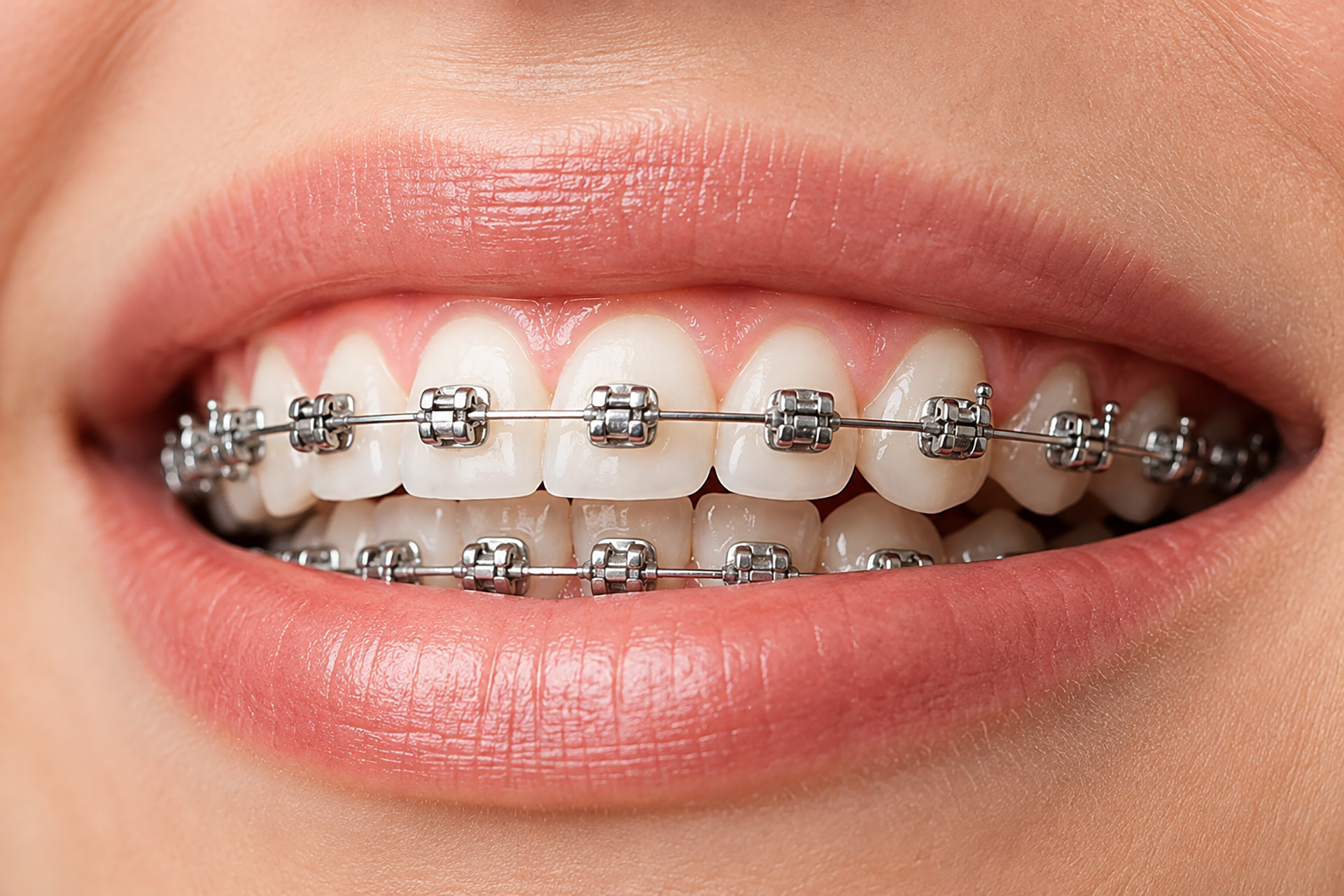
Traditional metal braces are the most common type of fixed braces. Traditional metal braces use high-grade stainless steel brackets and an arch wire. Dentists may also place metal bands around selected back teeth if it helps achieve results. Small elastic bands often hold the arch wire in conventional brackets, while additional rubber bands may be prescribed to help change the bite for jaw alignment. Whether metal braces are suitable depends on the required movements and the health of your teeth and gums.
Once fitted, the brackets and wires apply controlled pressure that gradually moves the teeth. These traditional metal braces can straighten crowded or crooked teeth and guide them towards the correct position. Metal braces can treat many problems, including crowded teeth, gaps, and some overbites, underbites, and crossbites. Your dentist or orthodontist will adjust the wires as treatment progresses, and you may feel some soreness after the adjustments, but it usually passes within a day or two.
When wearing braces, avoid chewing gum if advised. Brushing and flossing your teeth support oral hygiene and oral health throughout your mouth and help reduce tooth decay.
02
Ceramic Braces
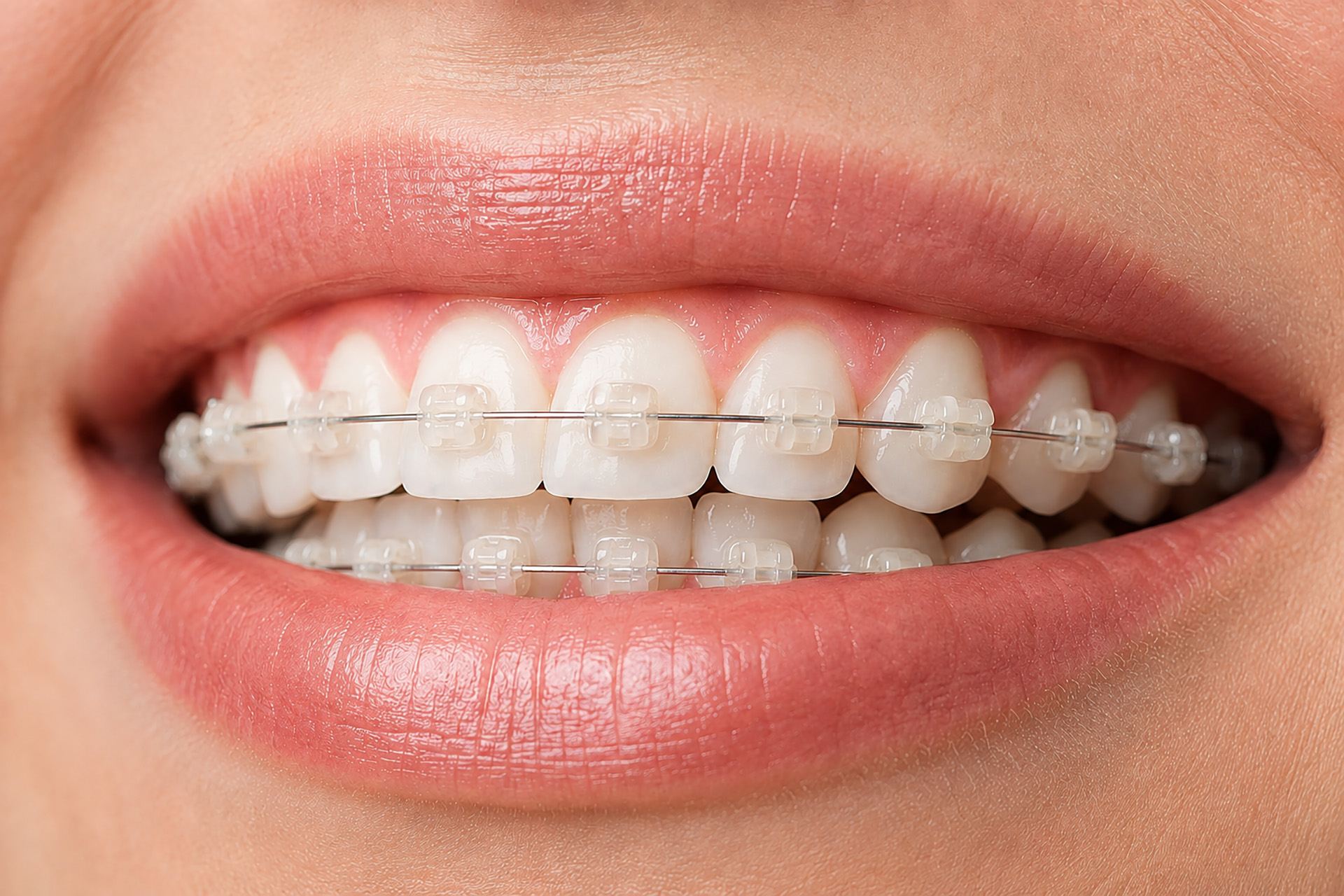
Ceramic braces work like traditional metal braces but use brackets made from clear materials or tooth-coloured ceramic. Unlike traditional braces, they are less noticeable from the front, although the arch wire may still be visible. These are better for patients who prefer more discreet braces, though it is important to understand differences between brace types beyond aesthetics. Among the different types of braces, they rank quite popular for patients across age groups.
Ceramic braces use components that are more brittle than metal brackets. Clear elastic bands can also discolour over time, especially with strongly coloured food, drinks or smoking. Whether ceramic braces can be used on all teeth depends on the bite and treatment plan. An orthodontist can assess whether ceramic braces suit the desired orthodontic movements.
03
Self-Ligating Braces
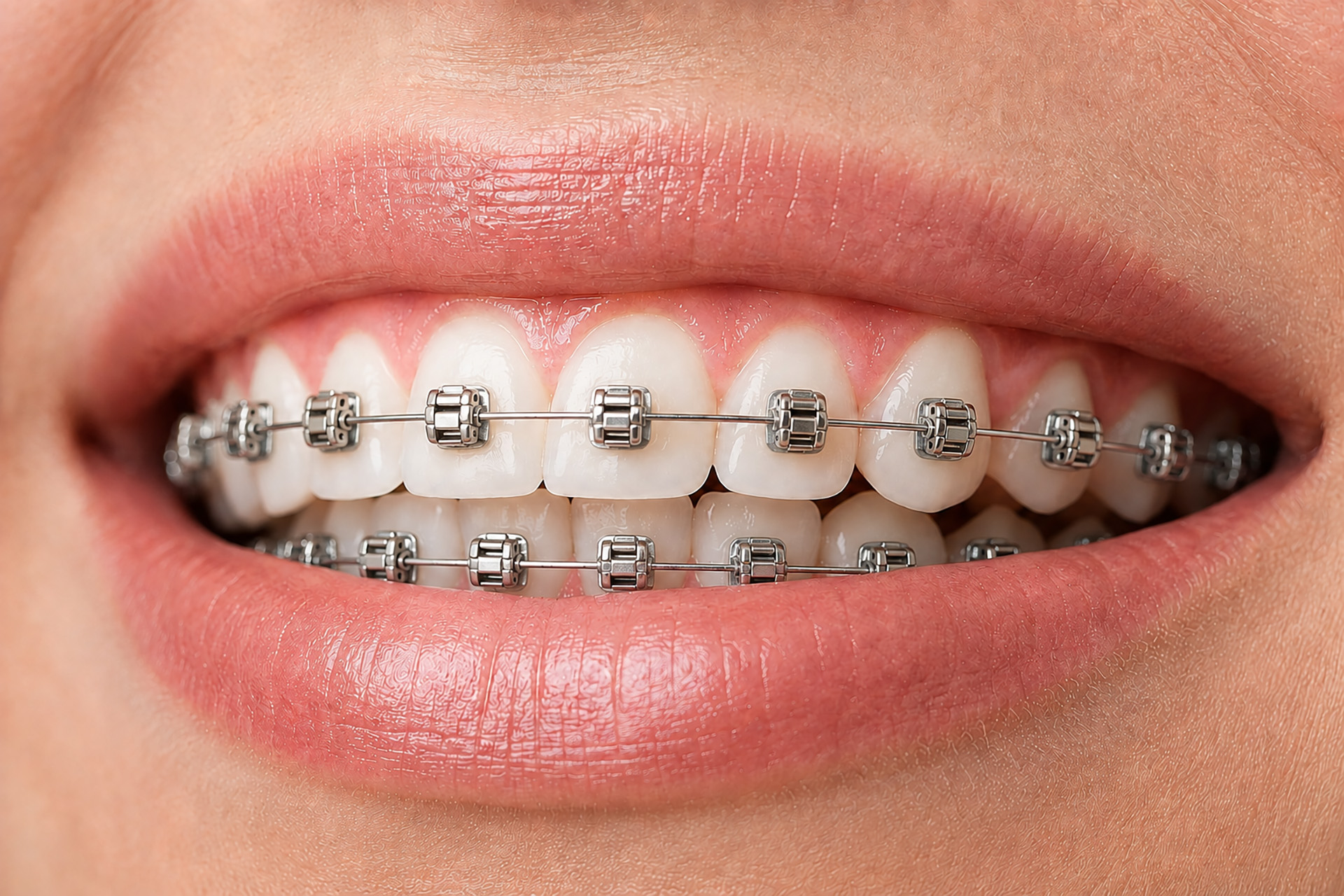
Self-ligating braces are fixed braces that use a clip or small door built into each bracket to hold the arch wire. Self-ligating brackets are available in metal and some tooth-coloured materials.
The bracket design can shorten the time needed to change a wire. The clip may create less friction, but less friction does not guarantee faster movement or less discomfort. Self-ligating braces still require daily brushing, flossing and oral hygiene.
Self-ligating braces and traditional braces both require an individual treatment plan, and it’s important you speak to your dental specialist about realistic expectations from self-ligating braces.
04
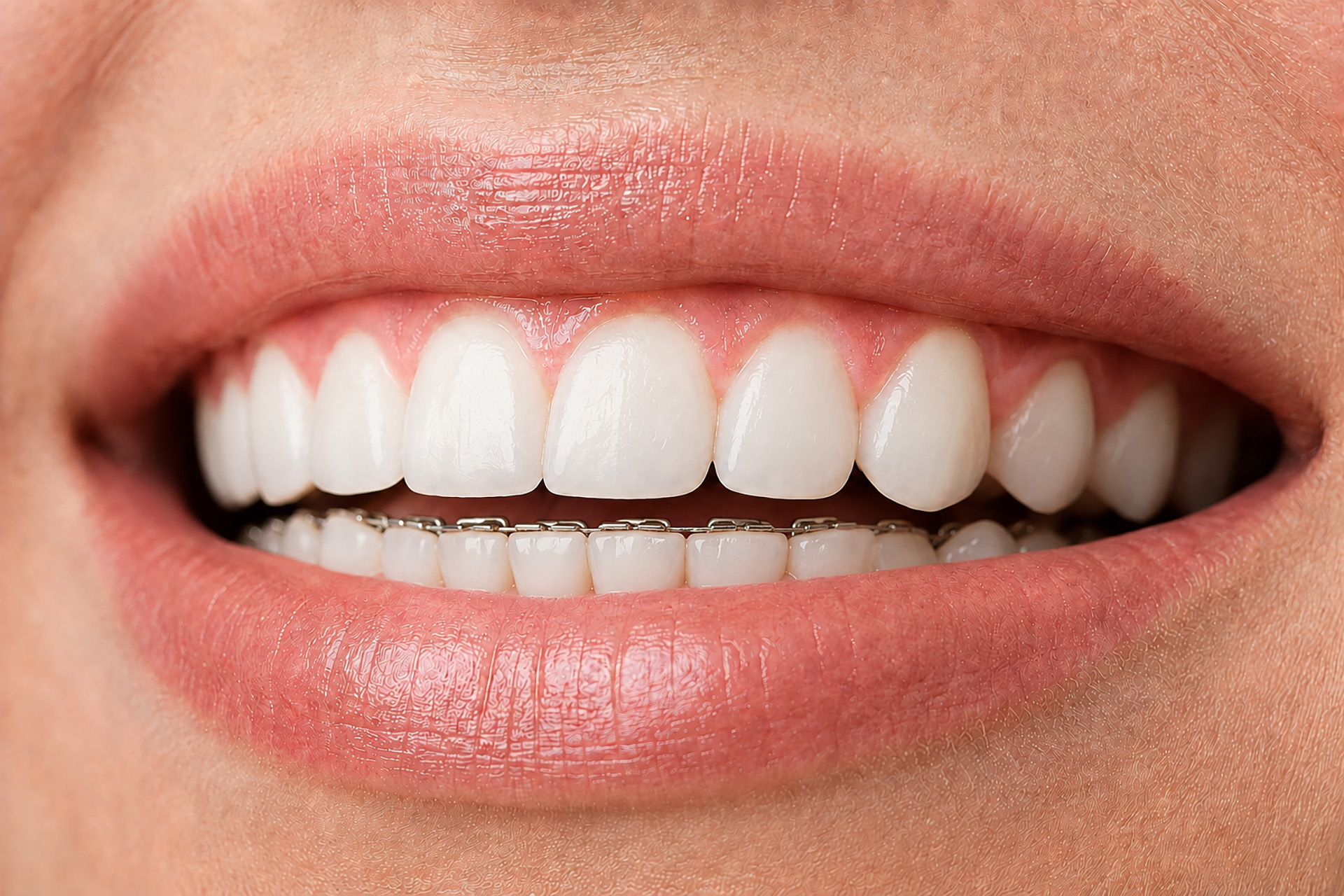
Lingual Braces
Clear aligners use a planned series of transparent, removable trays. Each tray guides specific tooth movements before you wear the next tray. You remove the aligners to eat, drink anything other than water, brush, and floss. Although sometimes called removable braces, aligners are not braces.
Most patients are instructed to wear aligners for about 20 to 22 hours a day. Clear aligners can manage many cases of crowding, spacing and bite misalignment, sometimes with tooth-coloured attachments or elastics. When suitable, the trays can help straighten selected teeth. They are not suitable for every patient or every tooth movement.
TEETH @ Tiong Bahru provides Invisalign clear aligners and OneSmile clear aligners. For a focused comparison, see clear aligners versus braces.
05
Clear Aligners
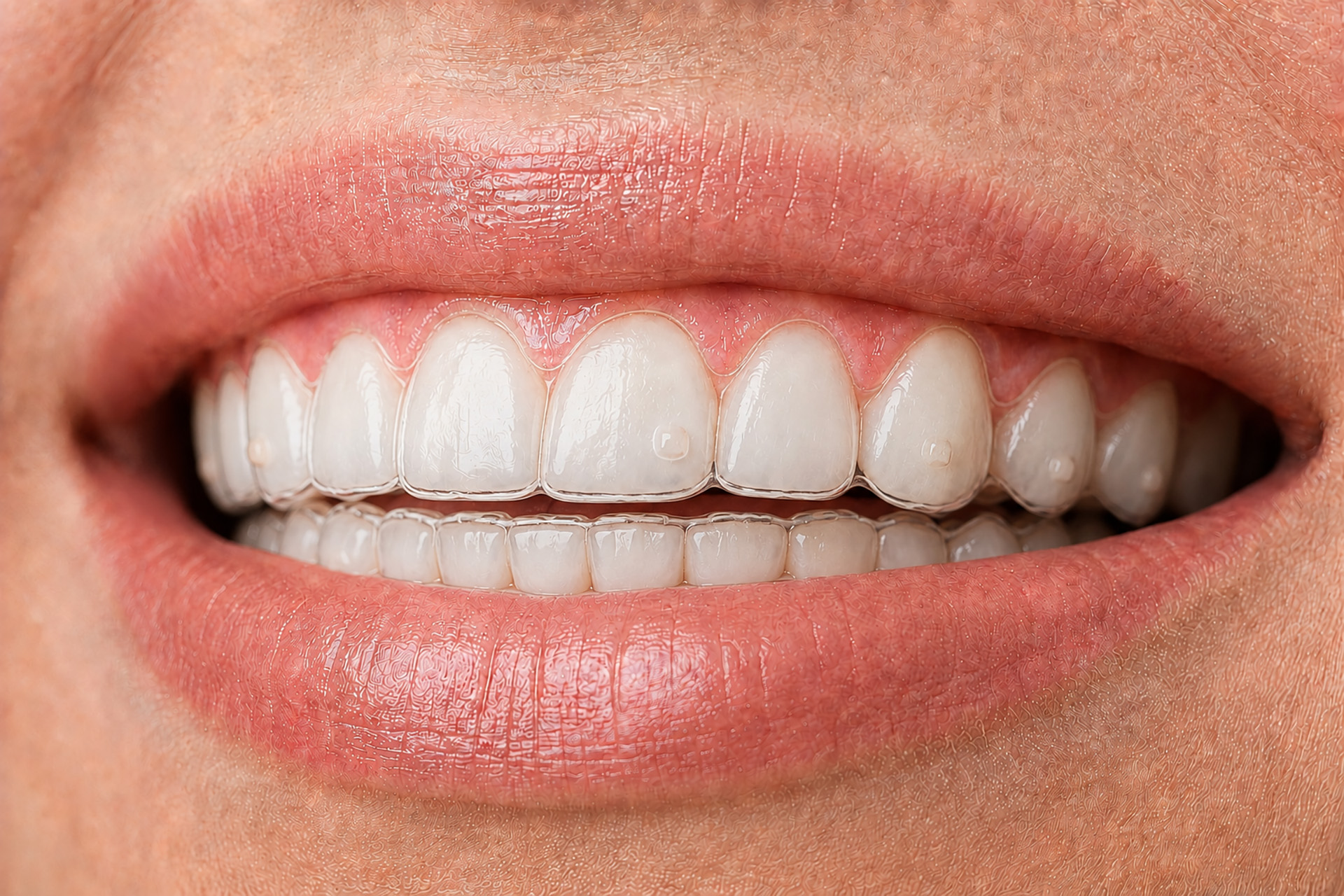
Clear aligners use a planned series of transparent, removable trays. Each tray guides specific tooth movements before you wear the next tray. Although sometimes called removable braces, aligners are not braces. You remove the aligners to eat, drink anything other than water, brush, and floss.
Most patients are instructed to wear aligners for about 20 to 22 hours a day. Clear aligners can manage many cases of crowding, spacing and bite misalignment, sometimes with tooth-coloured attachments or elastics. When suitable, the trays can help straighten selected teeth. They are not suitable for every patient or every tooth movement. Your dentist or orthodontist may recommend attachments or elastics when needed.
TEETH @ Tiong Bahru provides Invisalign clear aligners and OneSmile clear aligners. For a focused comparison, see clear aligners versus braces.
- Making the choice
Which Type of Braces May Suit You?
No single brace option suits everyone. Children may also need timing and growth considerations that differ from those for adult braces. The choice of braces depends on:
- The position of your teeth and the way your bite meets
- Visibility, speech and comfort considerations
- The movements needed and the complexity of dental treatment
- Your ability to clean the dental appliance and follow wear instructions
- Your personal preferences for a fixed or removable dental appliance
- Availability and cost
Are Retainers a Type of Braces?
Retainers are not included among the five options above. They are usually used after active treatment to hold the teeth in their new positions. Learn about retainers after braces.
- Current fees
Types of Braces and Prices at TEETH @ Tiong Bahru
The final fee depends on the treatment plan and what is included. Your dentist can give you a better estimate, as brace costs in Singapore vary by patient. See brace costs for fee details, or confirm the current fee during your assessment.
- At our clinic
Braces Assessment at TEETH @ Tiong Bahru
The dentist will examine your teeth, gums, and bite and may take photographs, X-rays, scans, or impressions as needed. You must manage dental issues such as tooth decay or active gum disease before starting any orthodontic treatment.
Your dentist will explain the suitable options, expected treatment requirements, material risks and fees. They can also discuss braces care and whether an orthodontic tooth extraction is appropriate. Extraction is not required for every patient.
At TEETH @ Tiong Bahru, we can assist you with your orthodontic treatment and assess your oral health. Make an appointment today at TEETH @ Tiong Bahru to evaluate your teeth and to see which types of braces are right for you.
Block 11A Boon Tiong Road, Singapore